The mist still clung to the asphalt on Hawthorne Boulevard as the black SUV crested the hill. It was a Tuesday morning in Southern California, the kind of morning where the world feels muffled, a bit uncertain, and heavy with the promise of another routine day. But for the man behind the wheel, routine had become a battlefield. His body was a map of surgical scars. His legacy was a mountain he had climbed, fallen from, and scaled again.
Then came the sound.
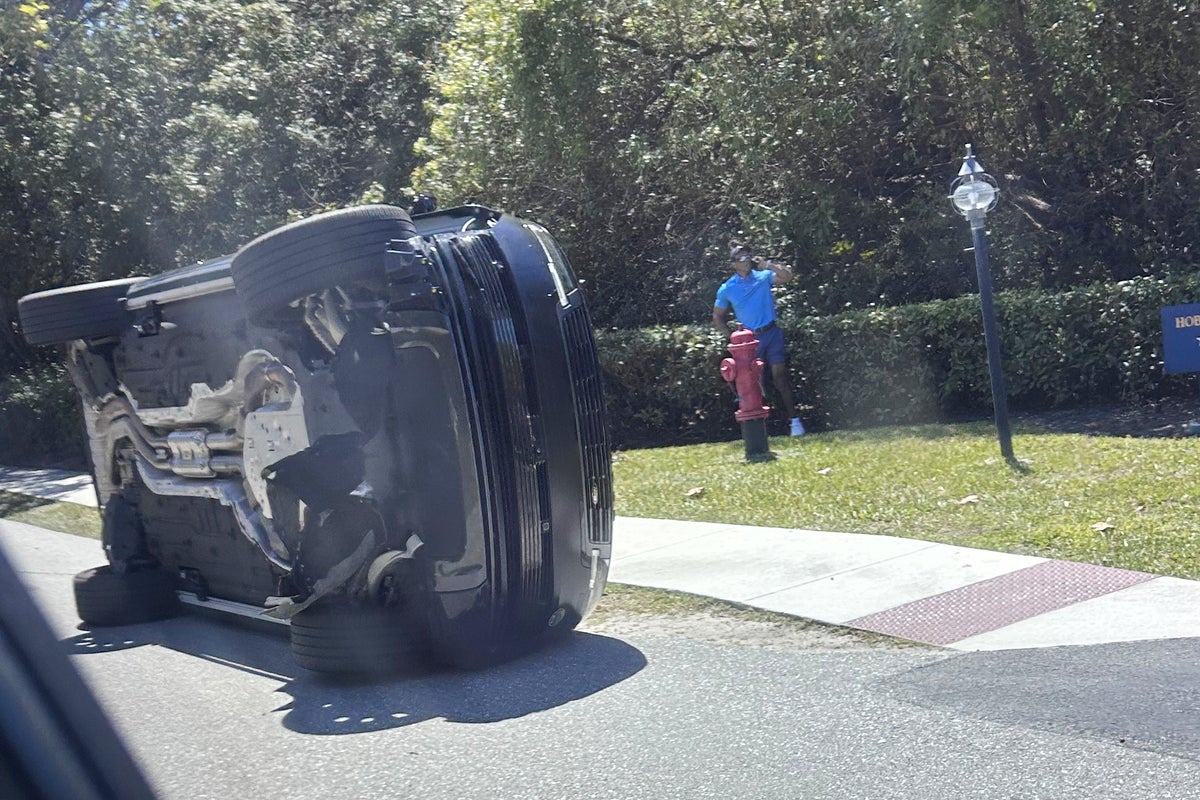
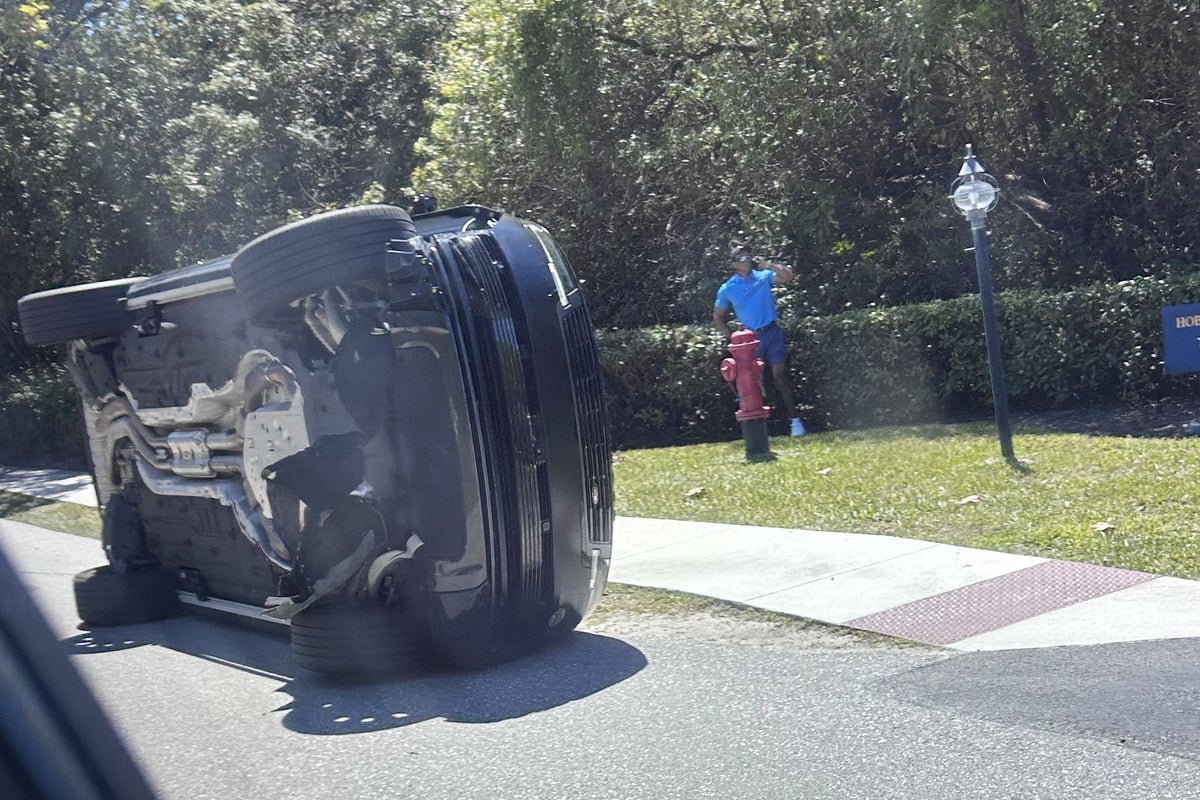
It wasn't the roar of a gallery at Augusta. It was the sickening crunch of high-end safety glass and the groan of reinforced steel yielding to the indifferent physics of a steep embankment. When the Genesis GV80 finally settled on its side, deep in the brush of Rolling Hills Estates, the silence that followed was louder than the crash.
Tiger Woods was trapped. Again.
The Anatomy of a Descent
We often view icons as untouchable machinery. We see the swing, the red shirt, and the fist pump, forgetting that underneath the Nike veneer is a human skeletal system held together by grit and medical-grade titanium. To understand what happened on that stretch of road near Rancho Palos Verdes, you have to look past the police tape. You have to look at the pressure of being the sun around which the entire professional golfing world orbits.
The facts of the crash are jarring. The vehicle crossed the center median, careened through two lanes of oncoming traffic, struck a curb, hit a tree, and rolled several times. There were no skid marks. No evidence of braking. Just a straight line into the abyss.
First responders found him conscious, but barely. They had to use an axe and a pry bar to pull him through the windshield. His right leg—the limb that had weathered multiple ACL reconstructions and the torque of a thousand-mile-per-hour swings—was shattered. Comminuted open fractures. Both the upper and lower portions of the tibia and fibula had pierced the skin.
Imagine the sensation of waking up in a metal cage, the smell of deployed airbags and dirt filling your lungs, and realizing that the very foundation of your physical existence has been splintered. It wasn't just a car accident. It was a collision between a legend and his own mortality.
The Invisible Weight of the Comeback
Why was he moving so fast? Sheriff’s deputies later estimated the speed at upwards of 84 miles per hour in a 45-mph zone. The narrative immediately shifted to the dark places we’ve been before with Tiger. People whispered about the 2009 fire hydrant incident or the 2017 arrest in Jupiter, Florida, where he was found asleep at the wheel with a cocktail of painkillers in his system.
But this time, the toxicology report was clean. There was no alcohol. No evidence of impairment.
Instead, there was something perhaps more relatable and yet more tragic: exhaustion. He was recovering from his fifth back surgery. He was hosting a tournament. He was doing a "teaching day" with celebrities like Dwyane Wade and Justin Bieber. He was a man trying to maintain the pace of a 25-year-old phenom while trapped in the aching body of a 45-year-old veteran.
Consider the mental load. When you are Tiger Woods, you don’t just "go for a drive." You carry the expectations of sponsors, the hopes of a struggling PGA Tour, and the relentless scrutiny of a public that demands you be either a god or a cautionary tale. There is no middle ground.
When the Sheriff announced that no charges would be filed, citing the lack of evidence for reckless driving beyond mere speed, the collective sigh of relief was palpable. Yet, the questions lingered. How does someone so disciplined, so obsessed with control, lose it so completely on a familiar road?
The Triage of a Legacy
In the Harbor-UCLA Medical Center, surgeons spent hours piecing him back together. A rod was inserted into the tibia. Screws and pins were used to stabilize the bones of the foot and ankle. The "trauma to the muscle and soft-tissue of the leg" required a surgical release of the covering of the muscles to relieve pressure.
This is where the story shifts from a news bulletin to a study in human resilience.
Most people, faced with such a catastrophic injury, would be grateful just to walk to the mailbox. For Tiger, the bar was different. The world didn't just want him to walk; they wanted him to win. The cruelty of our collective expectation is that we rarely allow our heroes the grace to be broken.
We watched the updates with a voyeuristic intensity. We looked for signs of a limp. We analyzed grainy footage of him walking on a beach with crutches. We were looking for the "old Tiger," refusing to accept that the old Tiger died on that hillside in Florida.
What remained was someone new.
The Cost of the Red Shirt
The impact of the crash wasn't just physical. It forced a reckoning with the concept of the "Tiger Era." For decades, golf was defined by his dominance. After the rollover, the sport had to face a reality where its brightest star might never walk eighteen holes again, let alone compete for a green jacket.
But the real story isn't about the scorecard.
It’s about the morning after the surgery, when the morphine wears off and the reality of the long road ahead sets in. It’s about the father who just wanted to play soccer with his kids, now facing the possibility of a permanent limp. It's about the vulnerability we all feel when we realize that one split second of inattention—one heavy eyelid or one missed turn—can rewrite the rest of our lives.
He wasn't a golfer in that SUV. He was a man running late, perhaps tired, perhaps distracted by the weight of being himself.
The mangled wreckage was eventually hauled away. The road was cleared. Life in Rolling Hills Estates returned to its quiet, affluent rhythm. But the scars on the asphalt remained for months, a dark streak of rubber and gouged earth that served as a reminder of how quickly the world can tilt.
We measure time in Tiger's life by the major championships. But perhaps we should measure it by the recoveries. The way he dragged himself out of the brush, through the hospital corridors, and back onto the grass.
The image that sticks isn't the trophy. It’s the sight of a man standing on a practice range, months later, leaning on a club like a cane, looking toward a horizon that had changed forever. He wasn't looking for the fairway. He was just looking for a way to stand on his own two feet.