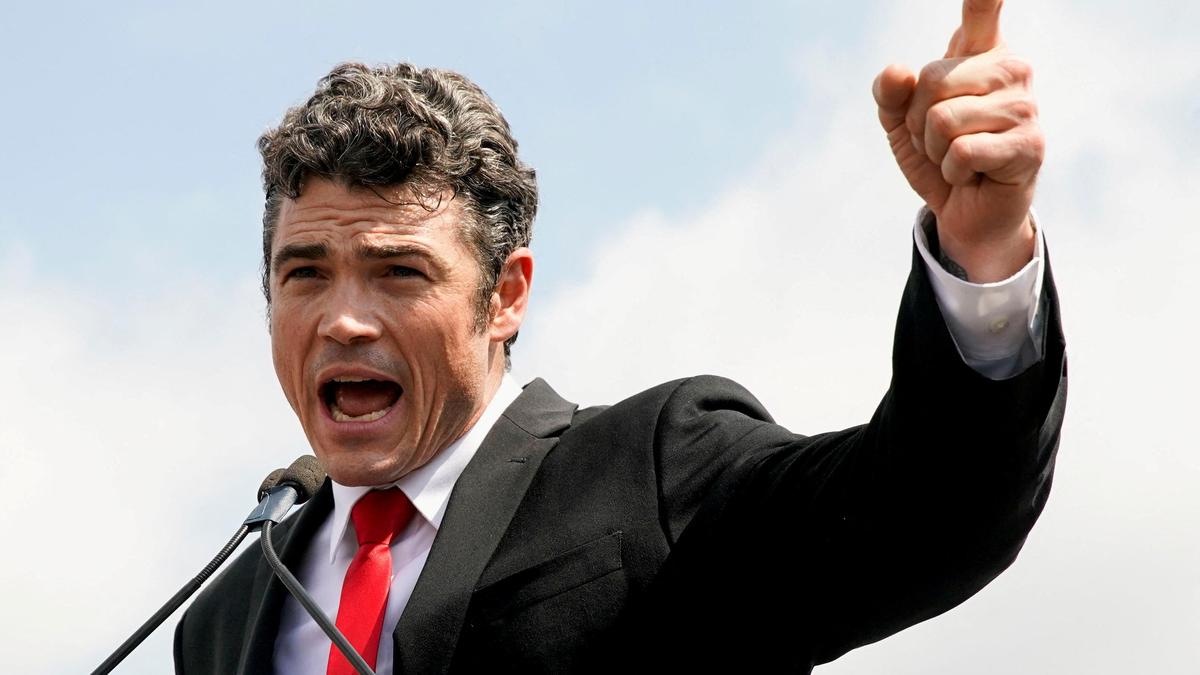
The Federal Bureau of Investigation has opened a criminal probe into Joe Kent, the former Director of the National Counterterrorism Center (NCTC), over allegations that he leaked classified information before resigning in a high-profile protest against the burgeoning war in Iran. The investigation, which sources indicate had been quietly churning for months before Kent’s Tuesday departure, marks a significant escalation in the internal conflict paralyzing the U.S. national security apparatus. Kent, a decorated Green Beret and CIA veteran, has moved from the inner sanctum of the intelligence community to the crosshairs of a federal inquiry that threatens to redefine the legal boundaries of dissent for senior officials.
While the Department of Justice has been tight-lipped, the timing of the leak investigation is inseparable from the geopolitical firestorm currently engulfing Washington. Kent walked out of his post on March 17, 2026, releasing a scathing resignation letter that accused the administration of manufacturing a pretext for military strikes against Tehran. His central claim—that Iran posed no "imminent threat" to the United States—contradicts the formal justification provided by the White House for the February 28 airstrikes that sparked the current conflict. Discover more on a similar issue: this related article.
The FBI's interest in Kent appears to be focused on his communications with external media figures, specifically his alleged role in providing sensitive intelligence to figures like Tucker Carlson. Administration officials, speaking on condition of anonymity, have characterized Kent as a "known leaker" who was systematically stripped of his access to presidential briefings months ago. This suggests the investigation is not merely a retaliatory strike following his resignation, but a long-standing effort to plug holes in an administration that has struggled with internal discipline since its inception.
The Intelligence Schism
At the heart of the Kent saga is a fundamental dispute over the quality and interpretation of intelligence regarding Iran’s nuclear and conventional capabilities. For years, the NCTC has been the primary hub for integrating threat data. When Kent took the helm, he inherited a desk where the red lines were increasingly blurred by political pressure. Additional journalism by USA Today highlights related views on this issue.
According to Kent’s recent public statements, the intelligence suggesting an "imminent" Iranian attack on U.S. assets was non-existent. He argues that the decision to engage in kinetic action was driven not by raw data, but by lobbying from Israeli officials and their American allies. This perspective has earned him the ire of the White House. President Trump, speaking to reporters shortly after the resignation, dismissed Kent as "weak on security," asserting that any official who failed to see the Iranian threat lacked the necessary judgment for the job.
However, the rift is deeper than a simple "he said, she said." Documents and testimony from the Senate Intelligence Committee suggest a fractured community. While Director of National Intelligence Tulsi Gabbard has remained publicly supportive of the President’s prerogative to declare a threat, other career officials have privately mirrored Kent’s concerns. The FBI’s investigation into Kent serves as a potent warning to these potential whistleblowers: dissent is one thing, but the unauthorized movement of data is a felony.
The Mechanism of the Leak
The FBI Criminal Division is currently examining whether Kent shared "Special Intelligence" (SI) or "Human Intelligence" (HUMINT) that detailed the specific sources and methods used to track Iranian officials. If the bureau can prove that Kent moved this data to unclassified channels—specifically to bolster his public case against the war—the legal consequences will be severe.
The investigation is reportedly looking at:
- Encrypted Communications: Logs of messages sent through non-governmental platforms.
- Briefing Discrepancies: Disparities between what was presented in the President's Daily Brief and what appeared in media reports.
- Physical Security: Potential unauthorized removal of documents from the NCTC headquarters.
Political Loyalty vs. National Security
The targeting of Joe Kent highlights the precarious position of political appointees who come from the "insurgent" wing of the Republican party. Kent, who once faced criticism from Democrats for his ties to far-right figures, was initially seen as a loyalist who would purge the "deep state." Instead, he became the very thing the administration feared: an insider with the credibility of a combat veteran who is willing to burn the house down to stop a war he believes is illegal.
The administration's response has been to frame the investigation as a matter of simple rule-of-law. They argue that regardless of a director's personal feelings on policy, the protection of classified information is absolute. Critics, including Senator Mark Warner, have pushed back, suggesting that while the politicization of intelligence is a concern, the use of the FBI to silence high-ranking critics of a war is a dangerous precedent.
The reality is likely messier. Kent is not a standard whistleblower; he is a seasoned operator who understands the value of information as a weapon. By taking his case to the public, he has effectively declared war on the very institutions he was hired to lead.
A Pattern of Prosecution
This investigation does not exist in a vacuum. Over the past year, the Justice Department has pursued several high-profile leak cases against individuals perceived as political adversaries. This has created an environment where the FBI is often viewed through a partisan lens, regardless of the merits of an individual case. For Kent, the defense will likely center on the "public interest" of the disclosures, even though such a defense is historically ineffective in Espionage Act prosecutions.
The bureau has a high bar to clear. Proving that an official of Kent’s stature knowingly and willfully endangered national security requires more than just evidence of a conversation; it requires a direct link between the shared information and a specific, damage-inducing leak.
The Fallout in Tehran and Washington
As the FBI digs into Kent's hard drives, the war he tried to prevent continues to escalate. Gasoline prices are surging, and the threat of a wider regional conflict looms as China threatens retaliation over tariffs linked to Iranian trade. Kent’s departure has left a vacuum at the NCTC at the exact moment when the agency’s "all-threats" mission is most critical.
The investigation into Joe Kent will likely take months, if not years, to resolve. In the meantime, the message to the intelligence community is clear: the cost of going public is a life under the microscope. Whether Kent is a martyr for the truth or a reckless actor who compromised American secrets is a question that will be decided in a federal courtroom, but the damage to the internal trust of the U.S. government is already done.
The immediate next step for the FBI involves the subpoenas of communications between Kent and his closest advisors during his final thirty days in office.