The British government just hit the brakes on one of its most controversial diplomatic handovers. If you’ve been following the saga of the Chagos Islands, you know the deal seemed like a done deal. Keir Starmer’s administration was ready to hand sovereignty over to Mauritius. Then, everything changed. Washington stayed quiet when London needed a loud "yes," and now the whole plan is in a state of deep freeze.
It’s a mess. Honestly, it’s a masterclass in what happens when domestic politics, global security, and a change in US leadership collide. For decades, the Chagos Archipelago has been a point of friction. Britain has held it since the 1960s, famously evicting the local population to make room for the Diego Garcia military base. That base is the crown jewel of US operations in the Indian Ocean. Without it, the Pentagon loses its primary staging ground for missions in the Middle East and South Asia.
When the Labour government announced the plan to return the islands to Mauritius, they thought they had a clever solution. They would give up sovereignty but keep a 99-year lease on Diego Garcia. It looked good on paper. It satisfied international court rulings that called the British occupation illegal. But it didn't account for the political earthquake in the United States.
The Washington silence that changed everything
The UK government didn't just wake up and decide to keep the islands. They were forced into a corner. For months, British officials sought a clear, written guarantee from the US that the deal was safe under a second Trump administration. They didn't get it.
The Biden-Harris administration was generally supportive of the deal. They saw it as a way to stabilize the legal status of the base. But as the 2024 election approached, the mood in DC shifted. Key Republican figures began calling the deal a "surrender." Marco Rubio and other influential senators raised alarms about Mauritian ties to China. They argued that handing sovereignty to Mauritius was basically handing a front-row seat to Beijing.
When Trump won, the silence from his transition team turned into a cold shoulder. British diplomats tried to get a "no-objection" signal. Instead, they got crickets. Without an explicit green light from the incoming Trump team, the Starmer government realized they were about to hand over a strategic asset while their most important ally was looking the other way—or worse, actively preparing to criticize them for it.
Why Mauritius is losing its grip on the deal
Mauritius has played its hand well for years. They used every international forum available, from the UN General Assembly to the International Court of Justice, to brand the UK as a "colonial occupier." They won the moral argument. Most of the world agrees that the Chagos Islands belong to them.
But moral arguments don't fuel B-52 bombers.
The primary concern for the UK and the US right now isn't international law. It's China. Mauritius has significant economic ties with Beijing. There are fears—some say exaggerated, others say justified—that if Mauritius takes control of the outer Chagos Islands, China will eventually build its own facilities there. Imagine a Chinese listening post just a few hundred miles from Diego Garcia. That’s the nightmare scenario for the Pentagon.
The UK government realized that pushing the deal through now would be seen as an act of diplomatic self-sabotage. If the Trump administration decides the deal is a security risk, they could theoretically pull out of Diego Garcia or demand new terms that the UK can't fulfill. Starmer can't afford a public rift with Trump this early in his term. So, he chose the only option left: stall.
The human cost of political foot-dragging
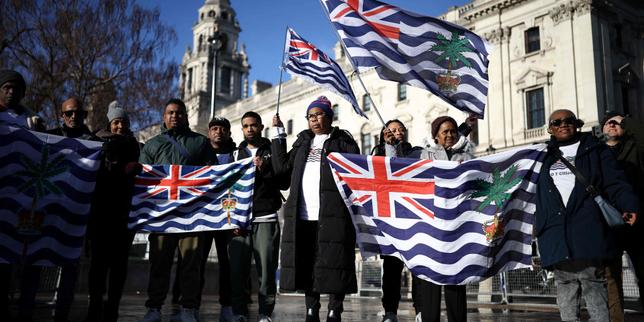
We can talk about "geostrategy" and "sovereignty" all day, but we can't forget the Chagossians. These are the people whose ancestors were forced off their land to make room for a runway. They’ve been living in exile in the UK, Mauritius, and the Seychelles for over fifty years.
For a brief moment, it looked like they might finally have a path home. The proposed deal included a resettlement fund and a promise that they could return to the outer islands. Now, that promise is gathering dust. The Chagossian community is split. Some want the deal because it offers a way back. Others hate it because it was negotiated over their heads without giving them a real seat at the table.
The suspension of the deal is a massive blow to these families. It's a reminder that in the world of high-stakes diplomacy, the rights of a few thousand people are often treated as a rounding error. They are stuck in a legal limbo that has no clear end date.
Is the deal dead or just sleeping
It's tempting to say the deal is dead. But it’s more accurate to say it’s in a coma. The UK hasn't officially cancelled the treaty; they just haven't moved to ratify it. They’re waiting to see how the new US administration actually behaves once they’re in the Oval Office.
If the Trump team decides that the 99-year lease is "good enough" and that the Mauritian government can be bought or bullied into keeping China out, the deal might move forward in 2027 or 2028. But that’s a big "if." Trump’s "America First" policy usually doesn't involve giving up territory, even if it technically belongs to an ally.
The UK is also facing internal pressure. The Conservative opposition, which has moved further to the right, is hammering Starmer for "decolonizing" British interests. They see the suspension as a victory. For Starmer, this is a humiliating retreat. He spent significant political capital on this, and now he has nothing to show for it but a frustrated ally in Mauritius and a skeptical one in Washington.
The China factor is the real dealbreaker
You can't understand this story without looking at a map of the "String of Pearls." This is the term used for China's network of military and commercial facilities along its sea lines of communication. From Djibouti to Gwadar in Pakistan, China is moving into the Indian Ocean.
The US sees Diego Garcia as the "unsinkable aircraft carrier" that holds back this influence. The British government’s mistake was thinking they could settle a territorial dispute without it being viewed through the lens of a new Cold War.
Mauritius has tried to reassure everyone. They’ve said they’ll be "loyal partners." They’ve offered the US a 99-year lease. But in the current climate in Washington, "trust me" isn't a valid security strategy. The suspicion is that economic pressure from Beijing will eventually force Mauritius to blink. If you're a military planner in the US, you don't take that risk.
What happens next
If you're looking for a quick resolution, don't. This is going to drag on. The UK government is currently conducting a "review," which is political shorthand for "waiting for the heat to die down."
Here is what to watch for in the coming months:
- Watch the Mauritian response. They might take the case back to the UN to increase the diplomatic heat on London.
- Look for statements from the US State Department after the inauguration. If they use words like "unacceptable risk," the deal is officially toasted.
- Follow the legal challenges in British courts. Chagossian groups are still fighting for the right of abode, regardless of who owns the dirt.
The reality is that Britain no longer has the luxury of an independent foreign policy in the Indian Ocean. They are tied to the US military machine. Until Washington decides that a deal with Mauritius is in its own best interest, the Chagos Islands will remain a British Indian Ocean Territory, and the status quo will remain firmly in place. You're seeing the limits of British sovereignty in real-time. It’s not about what London wants; it’s about what Washington allows.