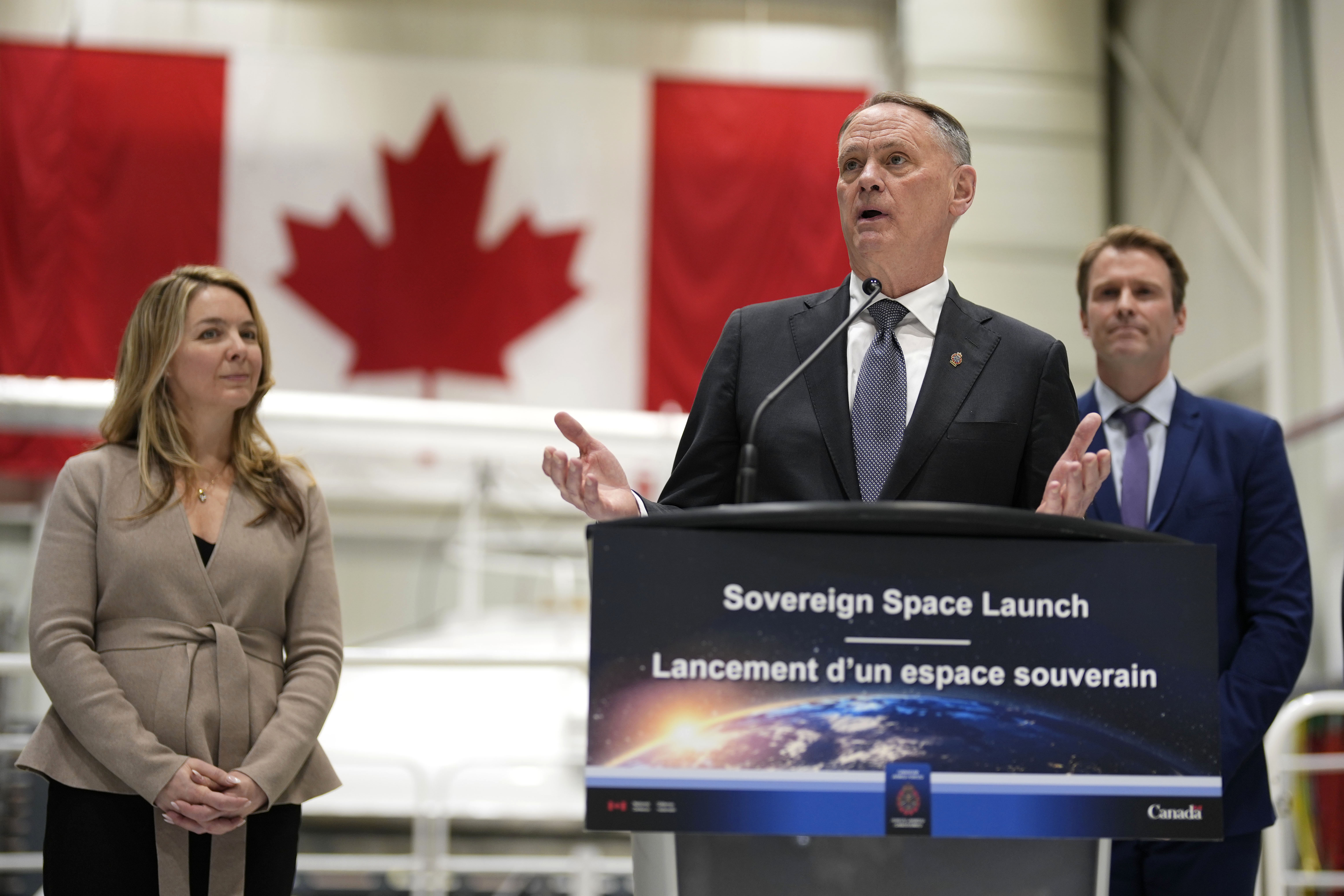
The Canadian government’s recent "commitment" to secure the Strait of Hormuz isn't a strategy. It is a suicide note dressed in diplomatic prose.
Ottawa, alongside a handful of European "allies" and Japan, issued a joint statement this week expressing a readiness to "contribute to appropriate efforts" to reopen the world’s most critical energy chokepoint. This follows two weeks of U.S.-Israeli airstrikes on Iran that have effectively turned the Persian Gulf into a graveyard for commercial shipping.
The consensus from the mainstream media is that this is a "pivotal moment" for international stability.
That is a lie.
This is a geopolitical vanity project that ignores the brutal reality of 21st-century asymmetric warfare. Sending a few aging Halifax-class frigates into a 21-mile-wide corridor lined with thousands of Iranian anti-ship missiles isn't "securing" trade. It’s providing the enemy with expensive, high-profile targets.
The Myth of "Freedom of Navigation"
The status quo argument is that a Western naval presence acts as a deterrent. This logic is decades out of date.
I have watched Western navies spend millions of dollars per intercept to down $2,000 Houthi drones in the Red Sea. Now, move that math to the Strait of Hormuz. Iran is not the Houthis; they are the architects of the technology the Houthis use.
In the Strait, geography is the ultimate weapon. You aren't fighting in the open ocean. You are fighting in a bathtub where the opponent holds the faucet. Iran’s Revolutionary Guard doesn't need a blue-water navy to win. They have:
- Thousands of Smart Mines: Cheap, stealthy, and capable of crippling a billion-dollar destroyer.
- Swarm Boats: Hundreds of fast-attack craft that can overwhelm even the most sophisticated Aegis combat system through sheer volume.
- Shore-Based Ballistic Missiles: Hidden in reinforced mountain silos along the coastline, immune to the "surgical" strikes President Trump claims have "obliterated" Iranian targets.
When Foreign Affairs Minister Anita Anand calls for the "no weaponization" of shipping lanes, she is tilting at windmills. The lane is the weapon.
The Economic Hallucination
The "allies" claim they are doing this to stabilize energy prices. Gas prices in Canada have already spiked 20 cents per litre in a week. Brent crude is flirting with $100 and could easily double if the conflict persists.
The counter-intuitive truth? Military "escorts" often make the economic situation worse, not better.
When the U.S. Navy begins "protecting" tankers, maritime insurance premiums don't go down. They vanish. Lloyd’s of London isn't looking for a frigate to sail next to a tanker; they are looking at the probability of a stray missile turning that tanker into a multi-billion-dollar environmental and financial catastrophe.
A naval escort is a neon sign that says "This Vessel is a Combatant." For commercial operators, the risk of being collateral damage in a high-intensity naval exchange is far higher than the risk of sitting tight in a port in Oman or the UAE. By "contributing efforts," Canada isn't lowering the price of gas; it's legitimizing a war zone that commercial shipping will continue to avoid at all costs.
The "Middle Power" Delusion
Prime Minister Mark Carney is attempting to play the role of the "ringleader for middle powers." It’s a classic Canadian trope: appearing relevant on the world stage without having the hardware to back it up.
Let’s talk about the hardware.
Canada’s naval contribution would likely consist of a single frigate or a handful of "staff officers" sent to a headquarters in Bahrain. This isn't a contribution; it's a target-of-opportunity. The Halifax-class frigates are 30-year-old designs. While their Evolved Sea Sparrow missiles ($SSM$) are capable, they were never intended to face the saturation drone and missile attacks Iran can facilitate.
$$Cost_{Intercept} = \frac{Price_{Missile}}{Price_{Drone}} \times n$$
When the ratio of $Price_{Missile}$ to $Price_{Drone}$ is $1,000:1$, you aren't winning a war. You are undergoing an uncontrolled bankruptcy. Iran knows this. They don't have to sink the Canadian Navy. They just have to make it too expensive for the Canadian taxpayer to keep them there.
The Real Question We Aren't Asking
Instead of asking "How can Canada help secure the Strait?", we should be asking "Why are we pretending the Strait can be secured by force?"
The answer is: it can't.
The Strait of Hormuz is a geographic reality that requires a diplomatic solution, not a kinetic one. Every ship Canada sends is a chip on the table in a game where Iran holds all the high cards. If the goal is truly to lower gas prices and protect "the world's poorest people" from food shortages, the solution isn't more warships. It is an immediate de-escalation that the current U.S. administration seems fundamentally uninterested in.
By joining this "joint effort," Canada is tied to a strategy of escalation. We are helping to build a "united front" that is actually a "united target."
The Cold Reality of Asymmetric Failure
Imagine a scenario where a Canadian frigate successfully intercepts five Iranian drones but misses the sixth. The ship is crippled. Canadian sailors are killed. What is the response? More strikes? A full-scale invasion of the Iranian coastline?
This is the "escalation ladder" that Ottawa is stepping onto without a plan for how to get off.
The "lazy consensus" says that being a good ally means showing up to every fight the U.S. picks. The nuanced reality is that a true ally tells you when you're walking into an ambush. The Strait of Hormuz is the ultimate ambush.
We are participating in a performance of power that masks a fundamental impotence. The Strait is closed because the cost of passage—political, physical, and financial—has become too high. No amount of Canadian "contribution" is going to change that math. It will only increase the bill.
Stop pretending this is about "peace and security." This is about appearing relevant while the global energy supply burns. If you want to help, stay out of the bathtub.
Don't send the ships. Send the diplomats. And if they won't go, keep our sailors out of the crosshairs of a conflict they cannot win and a geography they cannot defeat.