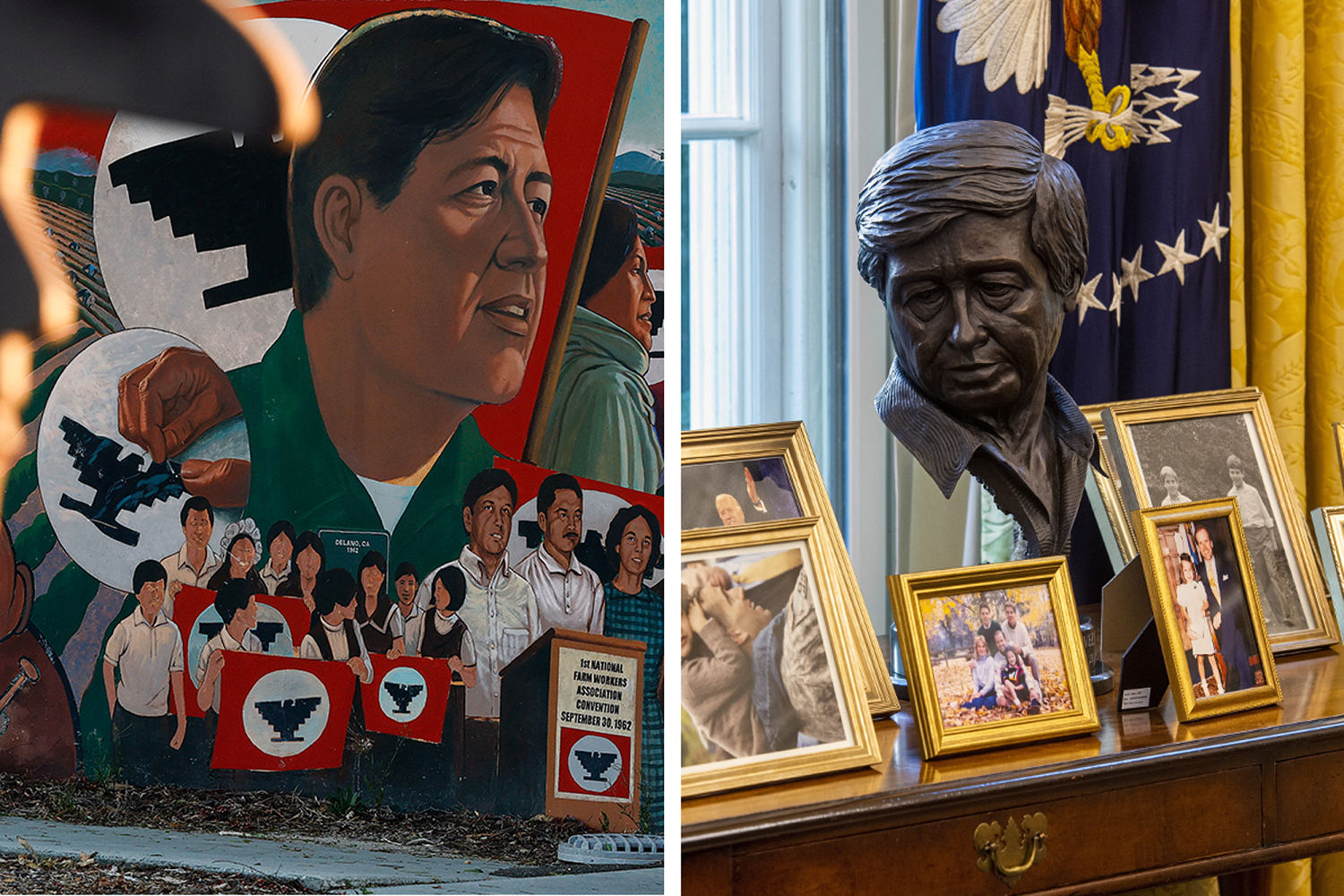
The modern American city is currently obsessed with a surface-level ritual: the Great Renaming. Local officials from California to Illinois are currently locked in a performative struggle to scrub Cesar Chavez’s name from signs, parks, and holidays. The "lazy consensus" from the opposition suggests this is a simple matter of correcting the record—a way to distance our public spaces from a man whose legacy includes complex stances on immigration and internal union purges.
They are wrong. Not because Chavez was a saint—he wasn’t—but because the movement to erase his name is a hollow substitute for actual historical literacy. We are trading historical complexity for a sterilized, focus-grouped present. If you think removing a sign fixes a community’s relationship with labor or civil rights, you are part of the problem.
The Myth of the Perfect Hero
The push to rename streets usually stems from a sudden realization that historical figures were, in fact, human beings with flaws. Critics of Chavez point to his "Illegals Campaign" in the 1970s and his use of "synanon" tactics to maintain control over the United Farm Workers (UFW). These are not state secrets; they are documented facts.
However, the logic of the "Purge Movement" assumes that public honors are reserved for the morally immaculate. This is a fairy tale. If we applied the same purity test to every name on a map, we would be left with numbered streets and nameless dirt paths.
Chavez was a labor leader, not a deity. His primary objective was the leverage of the worker. In the 1960s and 70s, that meant navigating a brutal agricultural system where growers used undocumented labor to break strikes. His stance on "wetbacks"—a term he used that makes modern sensibilities recoil—was a tactical, albeit harsh, response to strike-breaking.
When you remove his name because he doesn't fit the 2026 definition of a progressive ally, you aren't "correcting" history. You are lobotomizing it. You are removing the friction that forces people to ask: How did a man who fought for the poor also clash with the immigrant community? That tension is where the real learning happens.
The Cost of Civic Erasure
I have watched municipalities spend hundreds of thousands of dollars on committee meetings, new signage, and legal battles to change a single street name. It is the ultimate "feel-good" expenditure that yields zero tangible benefits for the people Chavez actually fought for.
Does changing "Cesar Chavez Way" back to "Army Street" improve the wages of agricultural workers in the Central Valley? Does it provide better healthcare for the people picking your strawberries? No. It provides a dopamine hit for local politicians who want to look "principled" without actually doing the heavy lifting of policy reform.
The Institutional Stupidity of Neutrality
Opponents often argue for a return to "neutral" names. They want "Oak Street" or "5th Avenue." This is the coward’s way out. Neutrality is the death of civic identity. A city should be a living museum of its conflicts, its triumphs, and its growth.
When you walk down a street named after a controversial figure, you are walking through a narrative. By flattening that narrative into "neutrality," you are creating a sterile, corporate environment that lacks soul. We are turning our cities into the physical equivalent of a LinkedIn feed—inoffensive, bland, and entirely devoid of truth.
The "Illegals Campaign" and the Nuance Trap
Let’s address the elephant in the room: Chavez’s reported reporting of undocumented workers to the INS. The "Purge" crowd uses this as their "gotcha" moment.
"How can we honor a man who turned in his own people?" they ask.
This question is flawed because it ignores the brutal reality of 1970s labor organizing. Chavez saw the UFW as a sinking ship being sabotaged by an endless supply of strike-breakers. His actions were desperate, arguably wrong-headed, and definitely cruel. But they were also the actions of a man trying to win a war against industrial titans who had the police and the law on their side.
By keeping the name on the street, we keep the conversation alive. By removing it, we bury the lesson. We lose the opportunity to discuss the inherent conflict between organized labor and open borders—a tension that still exists in the American soul today.
Stop Asking if He Was "Good"
The obsession with whether a historical figure was "good" or "bad" is a juvenile way to view the world. The better question is: Was he significant?
Did Cesar Chavez fundamentally alter the trajectory of American labor? Yes. Did he give a voice to a demographic that had been systematically silenced for a century? Yes. Did he do it with clean hands? Absolutely not.
If you want a hero with no baggage, go to the movies. If you want to live in a society that understands its own DNA, you have to keep the names of the people who shaped it, warts and all.
The Actionable Alternative: Context, Not Erasure
Instead of spending $50,000 on new metal signs, why aren't cities investing in digital markers? Imagine a world where you could point your phone at a street sign and get a raw, unvarnished history of the person—the wins, the losses, and the ugly parts.
- Keep the name.
- Add a plaque that tells the whole truth.
- Force the public to engage with the complexity.
That is how you build an educated citizenry. Tearing down signs is what you do when you are afraid of your own shadow.
The Irony of the Modern Progressive
There is a delicious irony in the fact that the same groups who claim to value "representation" are often the ones leading the charge to remove the most prominent Latino name from the American map. They are so obsessed with the "wrongness" of Chavez’s past tactics that they are willing to erase the most visible symbol of Latino political power in the 20th century.
It is a form of ideological cannibalism. They would rather have a blank wall than a mural with a scratch on it.
Your Move, City Council
The next time a petition hits your desk to rename a park or a holiday, ask yourself: Who does this actually help? If the answer is "It makes a small group of activists feel slightly less uncomfortable," then reject it. We do not owe the past a sanitizing scrub. We owe the future the truth.
The truth is that Cesar Chavez was a brilliant, flawed, aggressive, and essential figure in American history. If his name on a street sign makes you uncomfortable, good. Stay uncomfortable. Maybe that discomfort will lead you to pick up a book and find out why.
Stop treating your city like a social media profile that needs to be curated for optics. History isn't a brand; it’s a graveyard, and you don’t get to move the headstones just because you don't like the epitaph.
Keep the signs. Read the history. Grow up.


