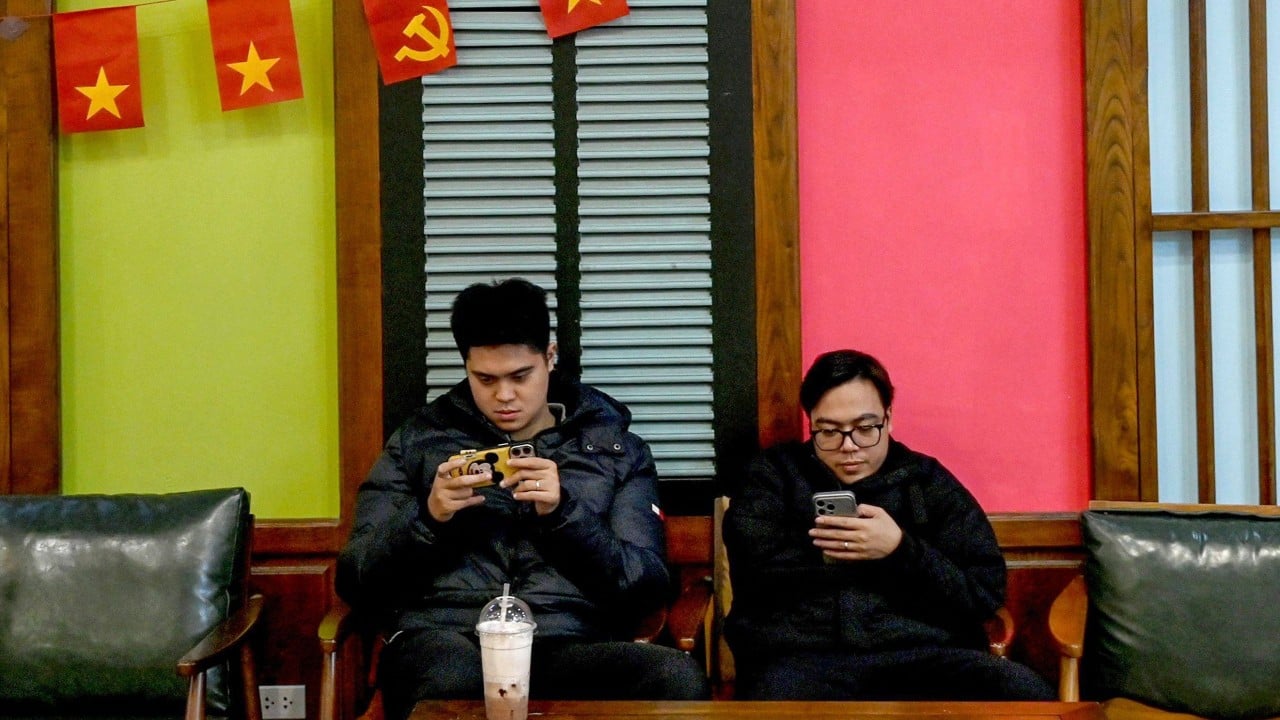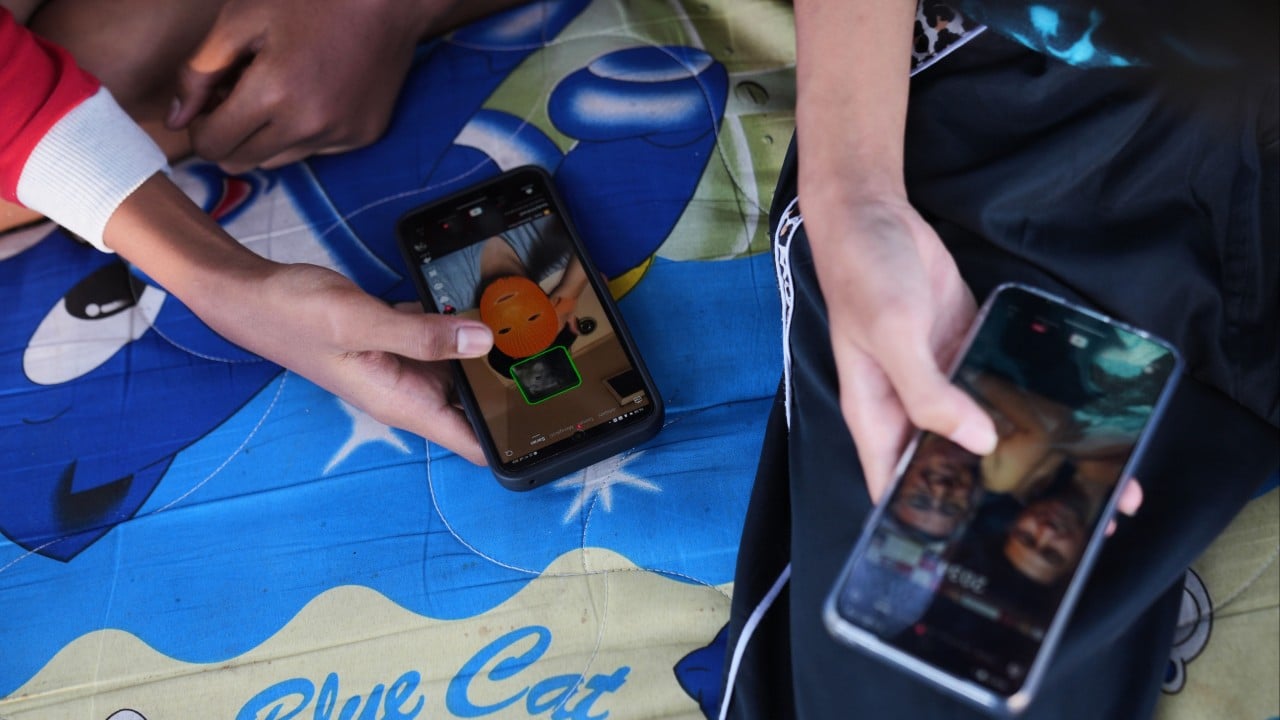
In a small, humid living room in Jakarta, twelve-year-old Budi sat cross-legged on a worn batik rug. His thumbs moved with a frantic, rhythmic precision that suggested something between a pianist and a frantic bird. He wasn't looking at his mother. He wasn't looking at the steam rising from the bowl of bakso she had placed beside him. He was chasing a digital ghost—a streak of dopamine delivered via a short-form video of a teenager dancing in a neon-lit bedroom three thousand miles away.
Budi is not real, but his hollow stare is. It is the stare that prompted the Indonesian government to do something that felt, to many, like trying to hold back the tide with a wicker basket.
Indonesia has officially begun the process of banning children under the age of 16 from social media.
This isn't just a policy update or a minor tweak to a terms-of-service agreement. It is a seismic shift in how one of the world’s most digitally active nations views the "digital playground." For years, we treated the internet like a library. We assumed that if we gave children the keys, they would simply read the books. We were wrong. We gave them a casino, and we forgot to tell them that the house always wins.
The Architecture of an Addiction
To understand why a nation would take such a drastic step, you have to look past the screens and into the neural pathways of a developing brain.
Consider the prefrontal cortex. This is the part of the brain responsible for impulse control, long-term planning, and weighing consequences. In a sixteen-year-old, this area is still under construction. It is a work in progress. It is soft clay.
Now, imagine dropping that soft clay into an environment designed by the world's most brilliant engineers to keep a user engaged for as long as possible. The algorithms behind platforms like TikTok, Instagram, and X are not neutral. They are predatory. They use variable reward schedules—the same mechanism that makes slot machines so addictive—to ensure that the next swipe might be the "big win."
When a child receives a "like," their brain releases a tiny flood of dopamine. It feels good. But the brain is adaptive. Soon, one like isn't enough. They need ten. Then a hundred. Then a thousand. They are chasing a horizon that keeps receding.
The Indonesian government looked at the rising rates of cyberbullying, the decline in physical activity, and the spike in adolescent anxiety. They saw a generation that was physically present but mentally elsewhere. They decided that the "right to connect" was being used as a mask for the "right to exploit."
The Great Disconnect
The ban is being implemented through a combination of mandatory age verification and hefty fines for platforms that fail to comply. It sounds simple on paper. In practice, it is a logistical nightmare.
Critics argue that children will simply find a way around it. They’ll use VPNs. They’ll use their parents’ accounts. They’ll find the dark corners where the light of regulation doesn't reach. And they are probably right. No law is a perfect shield.
But laws do something more than just regulate behavior; they signal value.
By setting the age at sixteen, Indonesia is making a cultural statement. It is saying that childhood is a protected space. It is saying that the data of a minor is not a commodity to be traded on the open market. It is a line in the sand.
Think about the way we regulate driving. We don't let twelve-year-olds behind the wheel of a car because we know they lack the judgment to handle two tons of moving metal. Why, then, do we give them a smartphone—a device with the power to destroy a reputation, ruin a sleep cycle, and reshape a personality—without a second thought?
The Invisible Stakes
There is a quiet tragedy in the way we’ve outsourced parenting to an algorithm.
In the villages of West Java and the high-rises of Surabaya, the evening used to be a time for storytelling. It was a time for communal prayer, for shared meals, for the slow, meandering conversations that build the foundation of a family.
The screen changed that.
It introduced a third party into every interaction. Now, when a father speaks to his daughter, he is competing with a global stream of influencers, celebrities, and curated perfection. He is competing with a version of reality that he can never match.
The stakes aren't just "screen time" or "eye strain." The stakes are the fundamental social textures of a nation. If an entire generation grows up unable to hold eye contact, unable to endure five minutes of boredom without reaching for a pocket-sized distraction, what happens to the workplace? What happens to marriage? What happens to democracy?
Social media thrives on outrage. It rewards the loudest, most divisive voices. It creates echo chambers where the "other" is always a villain. For a child whose identity is still forming, this isn't just information—it's indoctrination.
A Culture in Flux
Indonesia’s move has sent ripples across the globe. Other nations are watching closely, wondering if they have the stomach for such a confrontation with Big Tech.
The tech giants, of course, are not happy. They talk about "digital literacy" and "parental controls." They suggest that the solution is more education, not less access. But education takes time, and the algorithm moves at the speed of light.
There is a certain irony in the fact that many of the engineers who built these platforms in Silicon Valley do not allow their own children to use them. They know what is under the hood. They know that the "product" isn't the app; the product is the child's attention.
In Jakarta, the ban is being met with a mixture of relief and resentment. Parents who have struggled to pry phones out of their children’s hands feel they finally have a powerful ally. Teenagers, predictably, feel they are being punished for the sins of the digital age.
But maybe a little resentment is a small price to pay for the return of the sunset.
The Sound of Silence
Imagine a playground where the children are actually playing.
Imagine a classroom where the students are looking at the teacher, not hiding a glowing rectangle under their desks.
Imagine a dinner table where the only thing being shared is a conversation.
This is the goal of the Indonesian experiment. It is an attempt to reclaim the silence. It is a gamble that by taking away the digital noise, they can help their children find their own voices again.
It will be difficult. There will be loopholes. There will be protests. The platforms will fight back with everything their legal teams can muster. But the first step has been taken.
The screen has gone dark for the under-sixteens of Indonesia. And in that sudden, startling darkness, something else might finally have the chance to grow.
The sun sets over the Java Sea, painting the sky in bruises of purple and gold. On a beach in Bali, a group of teenagers are sitting in a circle. They aren't filming the tide. They aren't checking their notifications. They are just watching the water, listening to the waves, and for the first time in a long time, they are exactly where they are supposed to be.
They are present.