The glow of a smartphone screen at 2:00 AM creates a specific kind of isolation. It is a solitary light in a dark room, a portal into a global collective consciousness that never sleeps, even when the guns finally fall silent on the other side of the planet. When the news broke of a ceasefire—a word that carries the weight of thousands of lives and the fragile hope of a permanent end to structural ruin—the internet did what it does best. It translated the gravity of geopolitics into the language of the toy box.
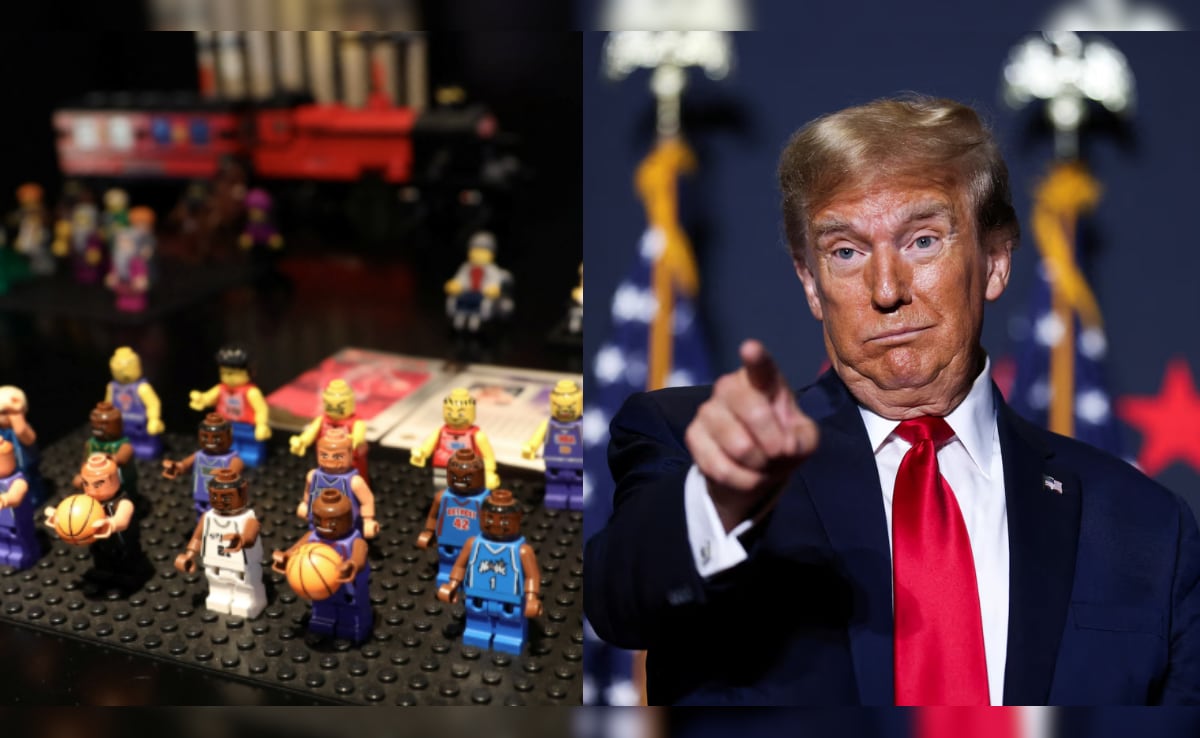
A digital image began to circulate. It wasn’t a photograph of a handshake in a marbled hall or a map of newly drawn boundaries. It was a render of a small, yellow-skinned plastic figure with a recognizable shock of bright blonde hair. A Lego-style Donald Trump, standing amidst the iconic colorful bricks of a childhood playset, framed by the announcement of a truce.
The image felt jarring. It felt irreverent. Yet, within hours, it had been viewed and shared by millions. This is the new anatomy of a global event. We no longer just process history; we remix it into something we can hold in our digital hands.
The Miniaturization of Giant Stakes
There is a psychological comfort in the toy aesthetic. Real war is visceral. It smells of dust, cordite, and exhaust. It is messy, agonizingly slow, and devastatingly permanent. Geopolitics, by extension, feels like a machine too large for any one person to influence or even fully comprehend. When a ceasefire is announced, the relief is often tempered by a cynical knowledge of how easily these agreements can shatter.
By rendering the architects of these deals as plastic figurines, the internet performs a collective act of "miniaturization." We take the titans of the evening news and shrink them down to two inches tall. We turn the terrifyingly complex machinery of international diplomacy into something that looks like it could be snapped together on a living room rug.
Consider a hypothetical user—let’s call him Elias. Elias lives in a city far removed from the conflict. He spends his days working a job that feels increasingly disconnected from the "big" movements of the world. When he sees the Lego Trump meme, he doesn't just see a political statement. He sees a version of reality that is modular. If a world can be built of bricks, it can be rebuilt. It can be fixed. The meme provides a sense of agency, however illusory, in a world that usually feels like it’s spinning out of control.
The Visual Language of the Viral Era
Why Lego? The choice isn't accidental. The brand occupies a sacred space in the global psyche. It represents logic, creativity, and a specific kind of orderly peace. Using that visual shorthand to describe a ceasefire creates a powerful, if bizarre, cognitive dissonance.
The meme functions as a "vibe check" for the geopolitical climate. It strips away the jargon of "strategic depth" and "demilitarized zones" and replaces them with a visual punchline. The blonde plastic hair and the tiny suit signify a specific era of American involvement in foreign affairs—a style of diplomacy that is often criticized as being as loud and colorful as a primary-colored brick, yet undeniably effective in capturing the world's attention.
But there is a shadow side to this digital shorthand. When we turn world-altering events into memes, we risk thinning the blood of the narrative. The human cost of the conflict—the families waiting for news, the soldiers stepping out of trenches, the children who will grow up in the silence of a truce—is flattened into a JPEG. The meme becomes the event, and the event becomes a footnote to the meme.
The Architecture of a Digital Truce
The ceasefire announcement itself was a study in traditional power dynamics. It involved high-level negotiations, back-channel communications, and the constant threat of a breakdown. It was a heavy, serious affair. Yet, the moment it hit the digital bloodstream, it was subjected to the relentless irony of the internet.
This irony is a defense mechanism. We are a generation that has grown up watching "once-in-a-century" events happen every Tuesday. We have developed a thick skin of sarcasm to protect ourselves from the emotional exhaustion of constant crisis. The Lego Trump meme is a byproduct of this exhaustion. It allows us to acknowledge the news without having to fully process the terror that preceded it.
Imagine the contrast: a diplomat in a tailored suit carefully choosing words that will be scrutinized by every intelligence agency on earth, and a teenager in a basement using an AI generator to see what that same diplomat would look like if he had a C-shaped plastic hand. These two realities now coexist. They feed off each other. The meme gives the news reach; the news gives the meme relevance.
Bricks, Clicks, and the Human Element
Despite the plastic sheen, the heart of the story remains human. The reason these images go viral isn't just because they are funny or weird. It's because they provide a point of entry.
For many, the complexities of a ceasefire are a barrier to entry. They don't know the history of the borders or the nuances of the tribal grievances. But they know Lego. They know the face of the former president. By combining the two, the meme acts as a gateway drug to current events. It forces a conversation, even if that conversation starts with a laugh or a roll of the eyes.
But what happens when the laughter stops?
The real stakes are not made of plastic. They are made of flesh and bone. As the digital world plays with its bricks, real people are walking back to homes that may no longer have roofs. They are looking at the sky and wondering if the silence will last. The meme is a reflection of our distance from that reality. It is a measure of how much padding we need between ourselves and the raw truth of the world.
The Narrative of the Unfinished Set
The internet has no "undo" button for history, but it has an infinite capacity for reimagining it. The Lego-style Trump memes are more than just a passing trend; they are a symptom of a culture that is trying to find its footing in a landscape where the line between entertainment and existence has blurred into nothingness.
We are all builders now, scrolling through the pieces of a story we didn't write, trying to find where we fit in the manual. We look for patterns. We look for a way to make the pieces click together. Sometimes, the only way to make sense of a world that feels like it’s falling apart is to imagine it as something that was designed to be put back together.
The screen dims. The 2:00 AM isolation returns. The image of the plastic man stays burned into the retinas for a second longer, a tiny, yellow totem of a peace that is as fragile as a toy left on a high shelf.
The world outside is quiet, for now. No bricks. Just the long, cold shadows of a reality that cannot be snapped back into place once it breaks.