The headlines are lying to you because they need a fight to sell subscriptions.
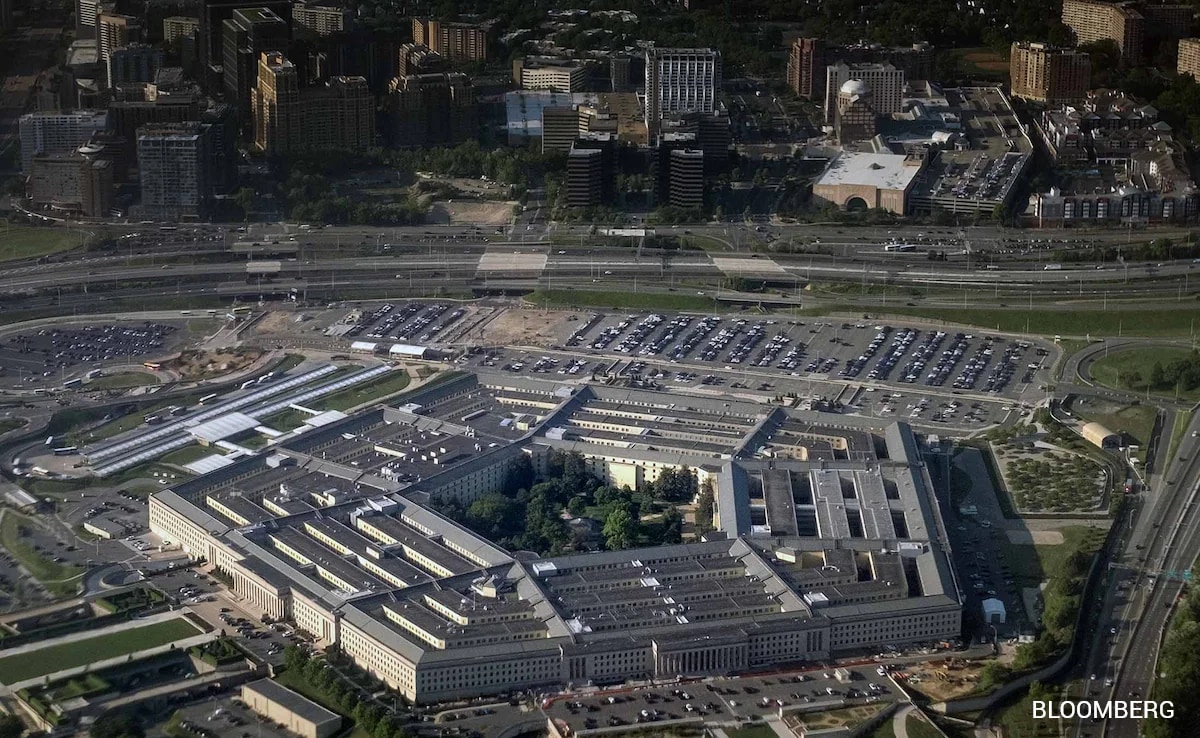
Mainstream media outlets are currently obsessed with the supposed "widening chasm" between the Pentagon and the Holy See. They point to the Pope’s recent denunciations of the arms trade and the Department of Defense’s polite, bureaucratic shrugs as evidence of a looming moral crisis. They want you to believe we are witnessing a clash of civilizations—the sword versus the cross.
It is a fairy tale.
The Pentagon isn't "playing down" a rift. They are ignoring a PR stunt. When the Vatican critiques the military-industrial complex, it isn't an act of rebellion; it’s a brand maintenance exercise. Conversely, when the Pentagon ignores those critiques, it isn't out of disrespect, but out of a deep, mutual understanding of the global marketplace.
Stop looking at this as a theological dispute. Start looking at it as a competition between two of the oldest, most successful institutional hierarchies in human history.
The Logistics of Moral Authority
The "lazy consensus" argues that the Vatican holds the moral high ground while the Pentagon holds the physical high ground. This binary is for amateurs.
In reality, the Vatican is a logistical powerhouse that manages a global network of "franchises" (parishes) that require physical security, political stability, and open trade routes to function. Who provides the umbrella of security that allows the Catholic Church to operate in volatile regions? It isn't the Swiss Guard. It is the footprint of the United States military and its allies.
The Vatican critiques the arms trade while simultaneously benefiting from the stability that trade—and the resulting hegemony—enforces. This is not hypocrisy in the eyes of a power player; it is a hedge. By publicly distancing itself from the "machinery of war," the Church preserves its ability to negotiate with the enemies of the West. It keeps a seat at the table in Tehran, Beijing, and Moscow that a U.S. diplomat could never occupy.
The Pentagon understands this perfectly. They don't want the Pope to be a cheerleader for Raytheon. If the Pope were a hawk, he would lose his utility as a back-channel mediator. The "rift" is a functional necessity for both parties.
The Myth of the "Just War" Pivot
Every few years, a fresh crop of pundits claims the Vatican is "evolving" its stance on "Just War" theory. They suggest that the Church is moving toward a total pacifist stance that will eventually de-legitimize Western defense spending.
This ignores 1,500 years of Canon Law. The Church doesn't "pivot." It layer-cakes.
Since the time of St. Augustine, the doctrine of Jus ad bellum (the right to go to war) and Jus in bello (right conduct in war) has provided the ethical framework that Western militaries still use to justify their existence. When the Pope speaks out against specific conflicts, he isn't tearing up the rulebook; he is arguing over the interpretation of a single clause.
The Pentagon loves Just War theory. It provides a secularized, legalistic veneer for kinetic operations. As long as the debate remains centered on "Is this specific war just?" the underlying premise—that war can be just—remains intact. The Vatican is the ultimate validator of the Pentagon’s moral architecture, even when it’s complaining about the plumbing.
Follow the Money: The Defense-Development Loop
If you want to see where the rift disappears, look at the budget.
The Vatican is one of the largest non-governmental providers of healthcare and education on the planet. These services are frequently deployed in "failed states" or conflict zones. To deliver these services, the Church relies on "Stability Operations"—a core pillar of modern U.S. defense strategy.
Imagine a scenario where the U.S. military completely withdrew from Sub-Saharan Africa or Southeast Asia as the Pope’s rhetoric suggests they should. The immediate vacuum would be filled by actors (mercenary groups, local warlords, or rival superpowers) who have zero interest in protecting Catholic missions, NGOs, or human rights.
The Vatican knows that a world without the Pentagon’s logistical dominance is a world where the Church’s global influence shrinks by half overnight. Their "criticism" is a luxury good, paid for by the very security apparatus they condemn. It is a classic "good cop, bad cop" routine played out on a geopolitical stage.
Why the "Peace" Narrative is a Business Strategy
The Pope’s recent focus on the "merchants of death" is widely interpreted as a direct shot at American defense contractors. It isn't. It's an attempt to capture market share in the Global South.
The Catholic Church is losing ground in Latin America and Africa to Pentecostalism and secularism. To remain relevant in these regions, the Church must position itself as the champion of the poor against the "imperial" powers of the North. Anti-war rhetoric is the most effective marketing tool for this demographic.
The Pentagon, meanwhile, is pivoting to "Great Power Competition." They are less concerned with what a parish priest in Brazil thinks about a drone strike and more concerned with hypersonic missiles in the Pacific. They are happy to let the Vatican have the "hearts and minds" of the Global South, provided it doesn't interfere with the actual movement of hardware.
The Professionalism of Silence
Notice the tone of the Pentagon’s responses to the Vatican. They are never defensive. They are never angry. They are "respectful."
This is the ultimate power move. If there were a real rift—a genuine threat to U.S. interests—the response would be different. You would see "leaks" about Vatican finances or diplomatic pressure on the Italian government. Instead, we get bland statements about "shared values."
The silence from the E-Ring confirms that the Vatican’s protests are considered "non-attritional." They don't cost the Pentagon a single dollar in appropriations. They don't delay a single weapons system. In the world of realpolitik, if a critique doesn't affect your budget, it didn't happen.
The Brutal Truth of the Partnership
People ask: "Can the Pope actually stop a war?"
The answer is no, and he doesn't want to. He wants to mitigate the fallout and govern the aftermath.
The Pentagon and the Vatican are the two oldest "Forever Institutions" in the West. They both think in centuries, not election cycles. They both manage massive, global bureaucracies. They both rely on a strict hierarchy and a specialized language to maintain power.
The "rift" is a performance for the masses who still believe that morality and power are separate entities. They aren't. They are two sides of the same coin. The Pentagon handles the body; the Vatican handles the soul. Both are required to keep the system running.
If you are waiting for the Pope to "take down" the military-industrial complex, you are waiting for a CEO to burn down his own warehouse. It’s not a conflict; it’s a division of labor.
Stop reading the headlines about disagreements and start watching the joint operations. Look at where Catholic charities and U.S. AID overlap. Look at the shared intelligence in the fight against human trafficking. Look at the silent coordination in refugee management.
The noise is for the pews. The signal is in the shadows.
The next time you see a headline about the Vatican "slamming" the Pentagon, remember: the person writing the headline is the only one who believes it. The generals and the cardinals are already at lunch, discussing how to manage the same world they both intend to rule for the next thousand years.