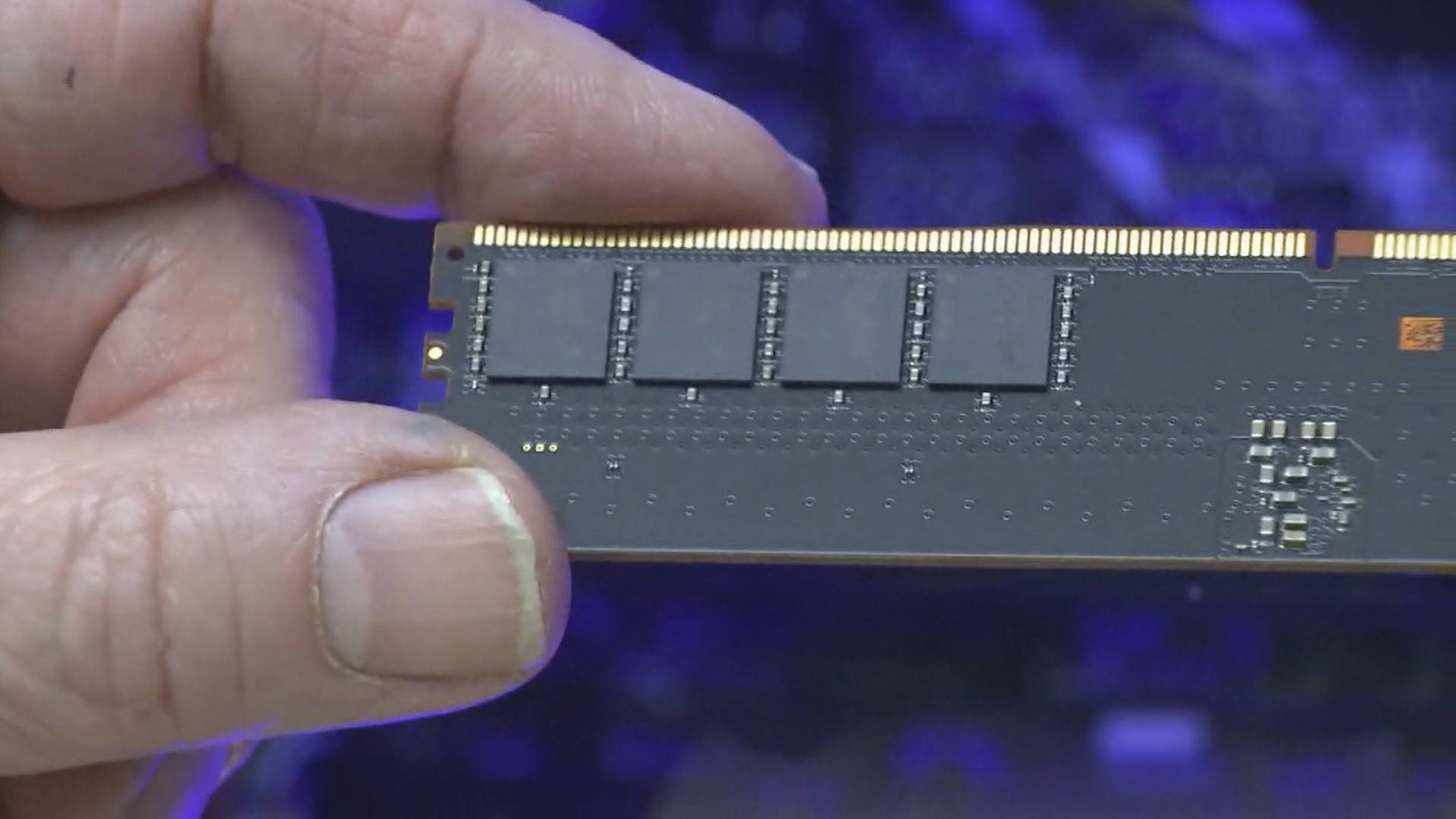
Stop whining about your $1,200 smartphone.
The tech press is currently obsessed with a narrative that is as lazy as it is wrong. They call it the "new normal." They point at supply chain hiccups and "unprecedented demand" for AI servers as the culprits behind the price hikes in SSDs, RAM, and mobile handsets. They want you to believe you are a victim of a global chip famine.
You aren't a victim. You’re a participant in a necessary correction.
The industry isn't suffering from a shortage; it is finally recovering from a decade of suicidal overproduction. For years, the "big three"—Samsung, SK Hynix, and Micron—engaged in a race to the bottom that turned high-performance silicon into a cheap commodity. They gutted their own margins to flood the market, and you got used to "dirt cheap" storage. That era was the anomaly. These current prices? This is what reality looks like when the people making the hardware actually want to stay in business.
The Boom-Bust Delusion
The "lazy consensus" argues that manufacturing constraints are the enemy. In reality, the enemy is the cycle.
In the semiconductor world, we track the book-to-bill ratio. When it’s high, everyone panics and builds more factories. By the time those multi-billion-dollar "fabs" are online, the market is saturated, prices crater, and the cycle resets.
Last year, the industry saw the most aggressive production cuts in history. Samsung didn't stop making chips because they couldn't find sand; they stopped because they were tired of losing money on every wafer. They intentionally choked the supply to save the market from itself. If you’re paying 30% more for an NVMe drive today, don't blame a "shortage." Blame a strategic, coordinated retreat from a value-destroying glut.
The HBM3e Tax is Real and You’re Paying It
The competitor articles love to mention AI, but they miss the technical nuance of why AI is killing your consumer hardware prices. It isn't just "demand." It's a fundamental shift in how silicon is baked.
Enter HBM (High Bandwidth Memory).
Nvidia’s H100 and B200 GPUs don't use the standard DDR5 sticks you put in a gaming rig. They use HBM3e—a complex stack of memory dies connected by "Through-Silicon Vias" (TSVs).
- Yield Sabotage: HBM production is incredibly inefficient. The yields are significantly lower than standard DRAM. For every ten wafers a manufacturer tries to turn into HBM, a large chunk ends up as scrap compared to standard memory.
- Capacity Cannibalization: A wafer used for HBM is a wafer that cannot be used for the RAM in your laptop.
- Profit Incentives: Why would Micron sell you 16GB of DDR5 for $50 when they can sell the equivalent silicon to an enterprise AI lab for five times the margin?
The industry isn't "short" on chips. It has simply found a much wealthier customer than you. You are being outbid by data centers, and frankly, you should be thankful. The massive R&D being poured into HBM will eventually trickle down into consumer tech, but only if the manufacturers have the capital to actually innovate. Cheap chips lead to stagnant tech. High margins lead to breakthroughs.
The Myth of the "Sovereign Supply Chain"
Politicians love to talk about "onshoring" chip production as a way to lower prices and ensure security. It’s a fantasy.
I’ve seen companies dump billions into domestic fabs only to realize that the cost of labor, environmental compliance, and electricity in the West makes the end product inherently more expensive. Building a fab in Arizona doesn't lower the price of a memory module; it adds a "security premium."
If you want the "old normal" back—where a 2TB SSD cost less than a steak dinner—you are essentially asking for the collapse of the Western tech economy. You cannot have "secure, domestic supply" and "ultra-low commodity pricing" at the same time. Pick one.
Stop Asking if Prices Will Drop
People always ask: "When will the shortage end?"
It’s the wrong question. The premise is flawed because it assumes the 2022 pricing was "correct." It wasn't. It was a fire sale caused by a post-pandemic inventory overhang.
If you are waiting for prices to return to those lows, you are waiting for a ghost. Instead, you should be looking at Price-per-Gigabit ($/Gb) trends over a five-year rolling average.
$$P_{avg} = \frac{\sum_{i=1}^{n} (Price_i \times Volume_i)}{\sum_{i=1}^{n} Volume_i}$$
When you run the math, you see that we aren't in a spike; we are returning to the mean. The "price hike" is actually just the market correcting a massive undervaluation of the most complex product humans have ever manufactured.
How to Actually Buy Hardware Now
If you’re looking for a deal, stop looking at the flagship consumer brands.
- Buy the "Trailing Edge": Everyone wants the latest Gen 5 SSDs. They are overkill for 99% of tasks. The glut still exists in Gen 4 and high-capacity Gen 3 stock. The "shortage" is a top-heavy phenomenon.
- Ignore the "Pro" Label: The markup on "Pro" or "Enterprise" consumer drives is pure theater during these cycles. The controller hardware is often identical to the mid-tier versions, just with a more aggressive firmware curve that you will never utilize.
- Watch the Cloud Titans: When AWS or Azure slows down their infrastructure refresh, memory prices will dip slightly. They are the only buyers that matter now. Your $200 upgrade is a rounding error to them.
The Brutal Truth
High prices are a sign of a healthy, innovating industry. Low prices are a sign of a dying one.
When memory is cheap, companies stop building new fabs. They stop researching 3D NAND layering. They stop pushing the boundaries of physics. We spent the last few years in a stagnation trap because no one could afford to innovate.
Now, the money is flowing again. The "shortage" is the engine of the next decade of computing power. If you have to pay an extra $100 for your next build to ensure the industry doesn't collapse into a state-subsidized monopoly, that's a bargain.
Stop checking the price charts. Pay the premium. The party of subsidized silicon is over, and the lights aren't coming back on.