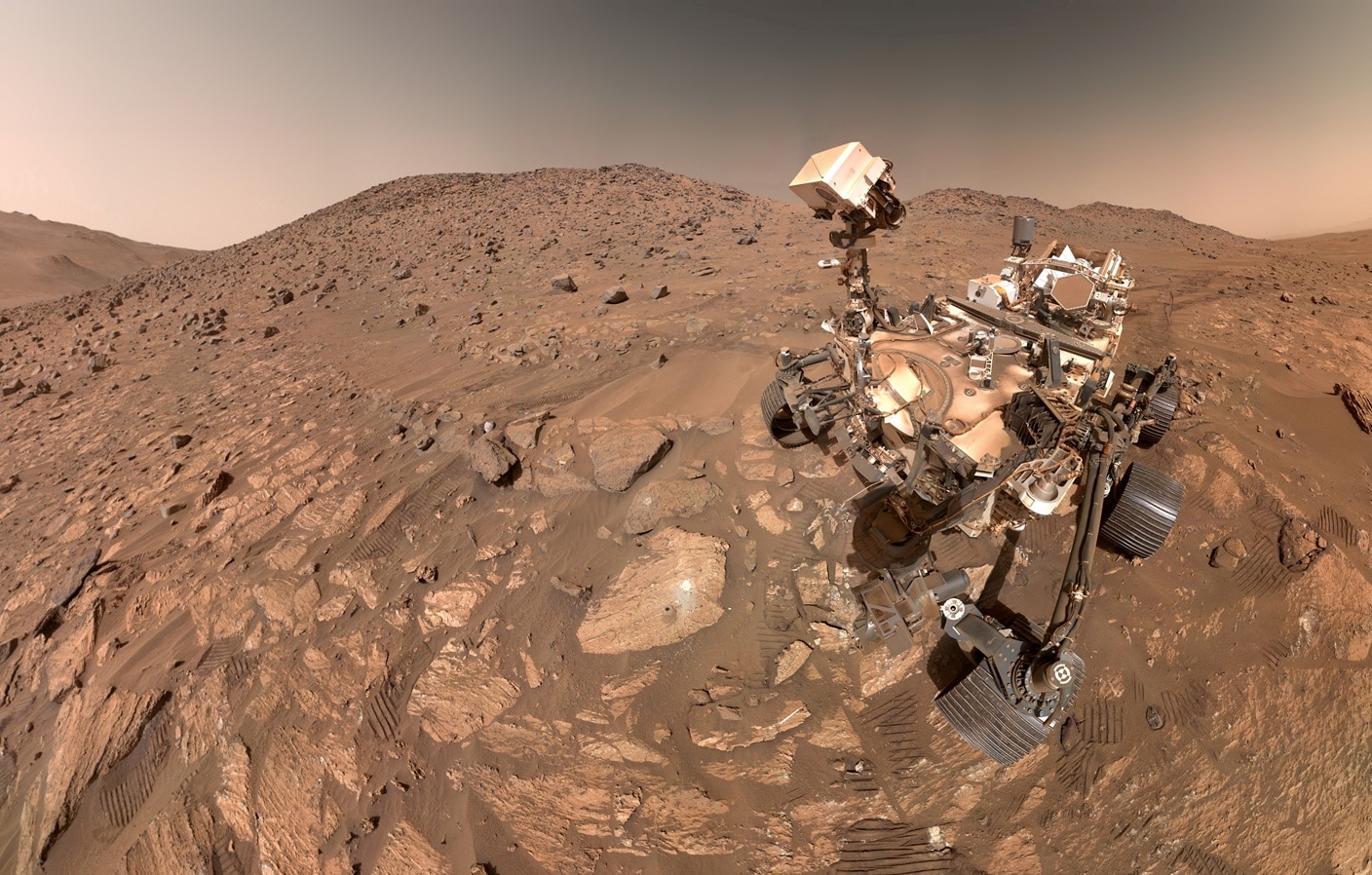
NASA just confirmed what many of us suspected for years. We've seen the streaks on the surface. We've seen the dried-up channels. But now, thanks to the Perseverance rover, we have the "smoking gun" buried right under the Martian dust. A massive river delta, 3.7 billion years old, sits preserved beneath the surface of Jezero Crater. This isn't just another grainy photo of a rock that looks like a face. It's a geological map of a world that once looked hauntingly like our own.
If you’ve followed Mars exploration, you know the stakes. We aren't just looking for water. We’re looking for where that water stayed long enough to cook up life. Rivers are great, but deltas are better. On Earth, deltas are nutrient-rich traps. They catch organic matter. They're the graveyards and the cradles of biology. Finding one on Mars that dates back nearly four billion years puts us directly in the window when life was first getting its act together on Earth.
Why the Jezero Crater Delta Changes Everything
Most people think of Mars as a giant, frozen desert. It is. But it wasn't always that way. The data coming back from Perseverance’s Ground-Penetrating Radar for Mars' Subsurface Experiment—or RIMFAX—is giving us a literal cross-section of history. It’s like looking at the rings of a tree, but the tree is a planet and the rings are layers of sediment.
The radar pulses sent into the ground revealed distinct, slanted layers of sediment. In geology, we call these "foreset beds." They only form in one specific way: when a steady river meets a deeper body of standing water. Think of the Mississippi meeting the Gulf of Mexico. As the river slows down, it drops its heavy cargo of silt and clay. Over millions of years, those layers pile up.
Finding these structures underground means the water didn't just flash-flood once and disappear. It stayed. It flowed. It created a stable environment. We’re talking about a lake that likely filled the entire 28-mile-wide Jezero Crater. That's a lot of real estate for microbes to call home.
The Problem With Surface Observations
For decades, we relied on orbital imagery. We looked down from satellites and saw the fan shape of the delta. It looked right, but looks can be deceiving in planetary science. Volcanic flows can mimic water channels. Wind erosion can play tricks on the eyes.
By using RIMFAX, NASA finally moved past the "it looks like a delta" phase and into the "it is a delta" phase. The radar can see up to 65 feet (20 meters) below the surface. What it found was a clear transition from the crater floor to these deltaic sediments. The boundary is sharp. It tells us that the lake didn't just appear out of nowhere; it had a beginning, a peak, and an end.
The layers are tilted. This is crucial. It shows that as the river dumped sediment, the delta built outward into the lake. It's a classic "prograding" delta. If you were standing there 3.7 billion years ago, you'd hear the sound of rushing water and see a muddy coastline. It’s wild to think about that on a planet that's now a vacuum-sealed tomb.
Where Does the Life Go
Here’s the thing about Martian life. We haven't found it yet. But we now know exactly where to dig. When a river slows down at a delta, the first things to drop are the big rocks. Then the sand. Finally, the fine mud and silt settle at the very edge.
On Earth, that fine-grained mud is the best place to find preserved fossils. It seals out oxygen and stops decomposition. If there were Martian "bugs" swimming around in Jezero Crater, their chemical signatures are likely trapped in those deep, buried layers of the delta. Perseverance isn't just taking pictures; it's collecting cores.
The rover has already filled several tubes with rock samples from these specific layers. The plan is to leave them on the surface for a future mission to pick up and bring back to Earth. Honestly, it's the most ambitious "mail delivery" in history. We won't know for sure until those rocks hit a lab in the 2030s, but the geological context we have now makes the odds of finding organic compounds much higher.
It Wasn't Just One Big Lake
One of the most interesting bits of the new data is the evidence of fluctuating water levels. The layers aren't perfectly uniform. There are signs that the lake rose and fell. Sometimes the river was a gentle stream. Other times, it was a torrent carrying large boulders.
This tells us the Martian climate was dynamic. It wasn't just "warm and wet" for a week. It stayed stable enough for a complex hydrological cycle to exist. You had rain or snowmelt, river transport, and long-term storage in craters.
The timeline is also important. These features date back to the Noachian period. On Earth, that’s when the first signs of life appear in our own fossil record. If two planets in the same solar system had the same conditions at the same time, it’s statistically weird if life only happened on one of them.
What Most People Miss About the Radar Data
People see the "3.7 billion years" number and their eyes glaze over. Don't let it. That age is significant because it’s right before Mars lost its magnetic field. Once the core cooled and the "shield" went down, the sun stripped the atmosphere away. The water boiled off or froze into the soil.
The fact that this delta is buried is actually a blessing. The surface of Mars is a radiation-soaked nightmare. Anything sitting on the top for a billion years gets shredded at a molecular level. But these delta layers have been shielded by a cap of volcanic rock and dust. They’re effectively vacuum-packed.
NASA's team found that the delta sits on an older, eroded surface. This suggests there was an even earlier period of water activity before the delta we see today even started forming. Mars has layers of history, and we’re only just peeling back the first one.
The Logistics of Bringing Mars Home
The next step isn't just more driving. It's the Mars Sample Return (MSR) mission. While some people argue about the cost, the discovery of this delta proves the investment is worth it. You don't send a multi-billion dollar retrieval mission to a random desert. You send it to the place where you’ve confirmed the existence of an ancient, life-sustaining environment.
Perseverance is currently working its way up the delta front. It’s climbing the "cliffs" of sediment. Every meter it climbs is a jump forward in time. It’s documenting the chemistry of each layer as it goes. If you want to follow along, check the raw image feeds NASA posts daily. You can literally see the layers in the rock faces.
If you’re interested in how we find life on other worlds, keep an eye on the "biosignature" announcements. We aren't looking for little green men. We're looking for isotopic ratios and complex carbon chains. The buried delta at Jezero is the most likely place in the solar system to hold those answers.
Start looking into the specific rock samples Perseverance has already cached. Each one has a "nickname" and a documented location. Knowing which ones came from the "delta front" versus the "crater floor" will help you understand the news when those samples finally land on Earth. The hunt for life isn't a "maybe" anymore. It's a "where" and "when." And now, we have the coordinates.