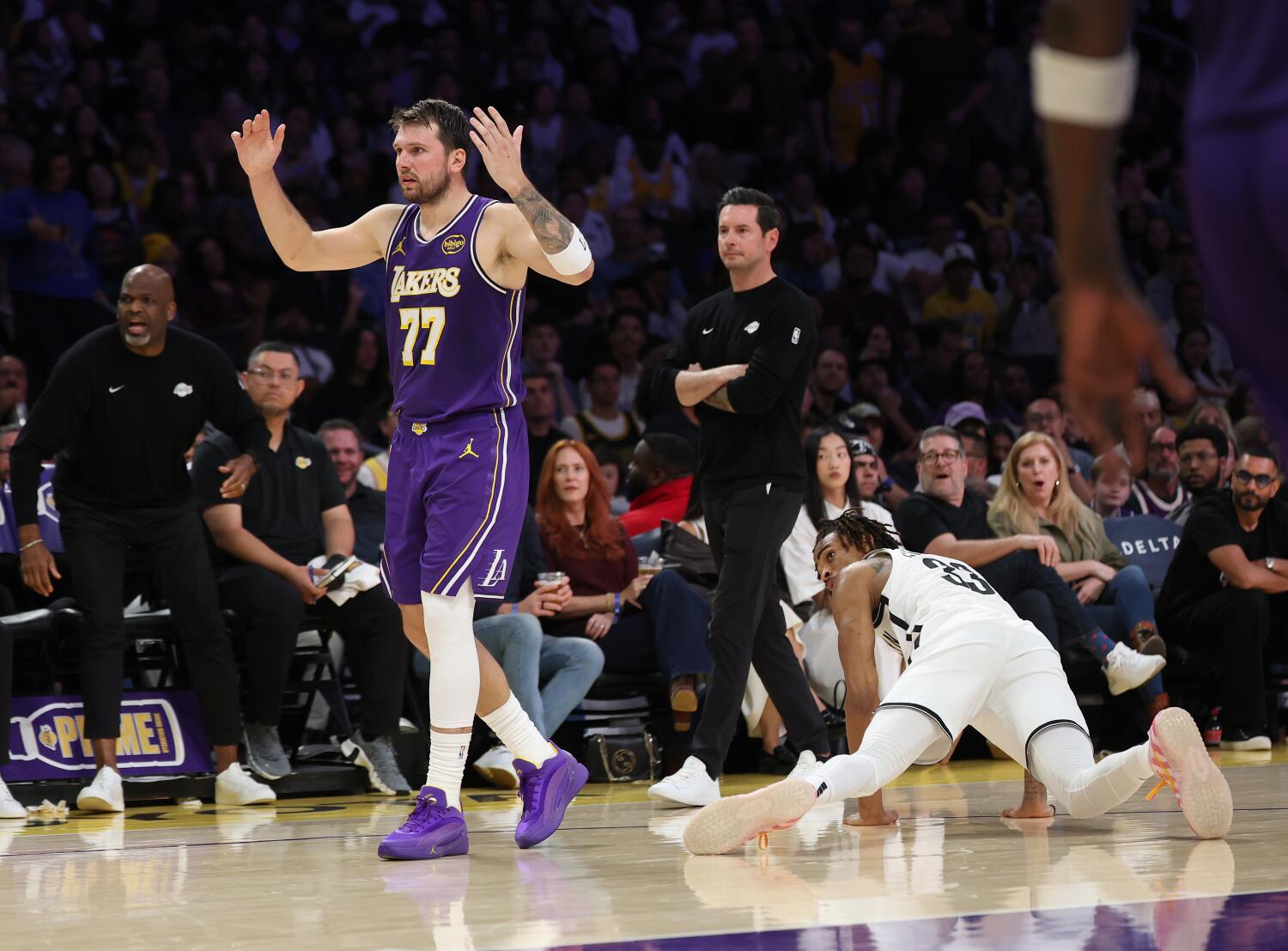
The NBA has a problem with Luka Doncic, but it isn't the one the league offices or the box-score-obsessed media think it is. On Monday, the narrative was predictable: Doncic crosses the 16-technical threshold, triggers an automatic one-game suspension, and supposedly "hurts his team" by being unavailable. The talking heads call it a lack of discipline. They call it a maturity issue. They treat it like a bug in the system.
They are dead wrong.
Doncic’s technical fouls are not a byproduct of emotional instability. They are the high-octane fuel for a heliocentric offensive engine that requires friction to generate heat. To ask Luka to stop barking at officials is to ask him to stop being the most dangerous player in the world. You are asking for a neutered version of a generational talent, and the Dallas Mavericks would be significantly worse for it.
The Myth of the Distracted Superstar
Standard sports commentary suggests that a player complaining to refs is "distracted" from the next play. This is a fundamental misunderstanding of how elite competitors manage their internal neurochemistry. For a player like Doncic, who carries a usage rate that would make a prime James Harden sweat, the game isn't just about X’s and O’s. It’s about psychological dominance.
When Luka is chirping, he is engaged. He is hyper-aware of every physical contact, every shifting defensive boundary, and every inch of the court. The "outbursts" are tactical calibrations. He is signaling to the officiating crew that the standard defensive physical limit has been breached. More importantly, he is signaling to his teammates that he is fully invested in the fight.
If you remove the edge, you remove the production. We’ve seen the "calm" Luka in short bursts. He is less aggressive. He settles for more step-back threes instead of punishing defenders in the paint. He loses the chip on his shoulder that allows a 6'7" guard to bully traditional centers. The suspension isn't a failure; it’s a scheduled maintenance cost for a high-performance machine.
The Efficiency of the Automatic Suspension
Let’s look at the math the "discipline" crowd ignores. The NBA season is an 82-game slog designed to break bodies. For a player with Luka’s workload—logging heavy minutes, initiating every set, and taking a physical beating every night—an occasional forced night off is a blessing in disguise.
The one-game suspension for reaching 16 technicals serves as a de facto "load management" day that the league can't fine the team for. It’s a loophole. While the media cries about the "disgrace" of a star missing a game, the Mavericks’ training staff gets a free window to let Luka’s ankles and knees recover without the PR nightmare of a "DNP-Rest" designation during a nationally televised game.
The Ref-Baiting Feedback Loop
Critics point to the technicals as a sign that Luka isn't "getting the calls." This is another surface-level observation. In reality, the constant pressure on officials creates a cumulative effect over a seven-game playoff series.
NBA officiating is a game of psychology. By establishing a baseline of constant dissatisfaction, Doncic forces officials to second-guess their whistles. It’s a war of attrition. If he stops complaining, he yields the territory. In a league where the difference between a foul and a clean block is often a fraction of an inch and a whole lot of reputation, silence is a tactical surrender.
Consider the greats. Michael Jordan didn't just play; he governed the court. Larry Bird was a psychological terrorist. Rasheed Wallace—the patron saint of technical fouls—knew that his volatility was a weapon that kept defenders on their heels. They didn't want to "poke the bear." Luka isn't losing control; he is building a fortress of intimidation.
The Cost of the "Maturity" Trap
The push for Luka to "grow up" is really a push for him to become more corporate, more predictable, and easier to manage. This is the same logic that tried to strip the personality away from Allen Iverson or the fire from Kevin Garnett.
The NBA thrives on the tension between the "beautiful game" and the raw, unscripted emotion of its stars. When we demand that Luka act like a stoic statue, we are asking for a less effective basketball player. His game is built on rhythm, and his rhythm is dictated by his emotional state.
I’ve watched scouting departments try to "fix" high-usage players by tightening their leash. It almost always results in a drop-off in creative output. You cannot have the 40-point triple-double without the 15 minutes of complaining. They are two sides of the same coin.
The Failure of the Technical Foul System
The problem isn't Luka; it’s a rigid, 20th-century disciplinary system trying to govern 21st-century athletes. The 16-technical rule is an arbitrary threshold that doesn't account for usage, minutes played, or the specific defensive strategies used against a player.
A player like Luka, who handles the ball on nearly every possession, has ten times more opportunities to interact with an official than a corner-3 specialist. On a "per-possession" or "per-interaction" basis, Luka’s technical rate isn't even that high. It only looks egregious because he is the sun around which the entire Dallas universe revolves.
If the league wanted to be fair, technicals would be weighted against usage rate. But they aren't interested in fairness; they are interested in optics. They want the stars to be quiet, polite employees. Luka refuses to play that role.
The Uncomfortable Truth for Mavs Fans
You should be worried when Luka stops getting technicals. That is the day he has checked out. That is the day the competitive fire has dimmed to a flicker.
The suspension on Monday isn't a setback. It’s a statement of intensity. It’s the price of admission for a talent that refuses to be tamed or quieted. While the "experts" dissect his body language and lecture him on sportsmanship, Luka is sitting back, resting his legs, and preparing to unleash another 40-point barrage the moment he returns.
Stop asking him to change. Start asking why the rest of the league isn't playing with the same level of desperate, unhinged energy.
If you want a polite superstar, go watch a press conference. If you want a champion, you take the technicals, you take the suspensions, and you thank him for being the only person on the court who gives a damn about every single whistle.
The "discipline" the media craves is just another word for mediocrity. Luka chooses the fire. Dallas should, too.
Buy the jersey. Ignore the whistles. Let the man work.