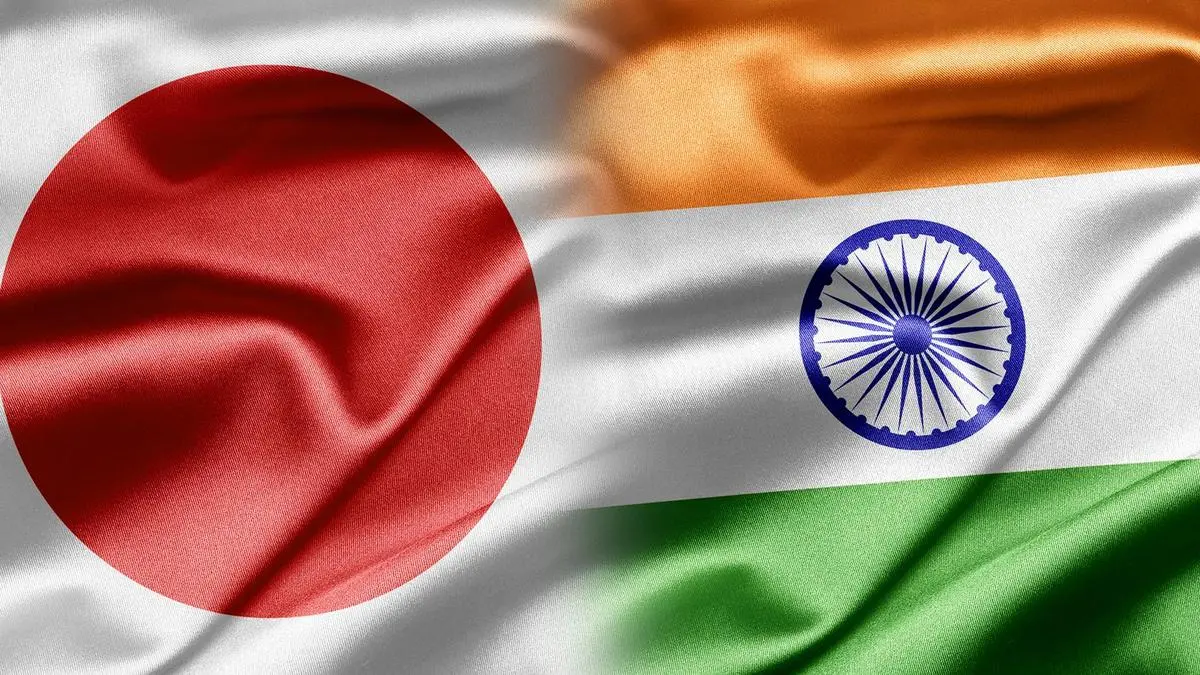
India and Japan are quietly redrawing the security map of the Middle East to protect the world’s most vulnerable maritime chokepoint. While the Strait of Hormuz is often viewed through the lens of Western-Iranian tensions, the recent high-level coordination between New Delhi and Tokyo marks a shift toward an Asian-led security architecture. Both nations realize that their economic survival depends on a 21-mile-wide strip of water that handles nearly a third of the world’s seaborne oil. This is not just a diplomatic courtesy visit. It is a calculated move to reduce reliance on the U.S. Navy and safeguard energy pipelines that feed the world's third and fifth-largest economies.
The Fragility of the Energy Lifeline
The Strait of Hormuz is a geographic nightmare for logistics. It is the only sea passage from the Persian Gulf to the open ocean. If this gate shuts, the global economy enters a cardiac arrest. For India, the stakes are existential. Over 60% of its crude oil imports and a massive portion of its natural gas arrive through this corridor. Japan finds itself in an even tighter spot, relying on the Middle East for roughly 90% of its oil.
The traditional security model, where the United States acted as the sole guarantor of the Gulf, is fraying. Washington’s focus has drifted toward domestic energy independence and the containment of China in the South China Sea. This leaves a vacuum. New Delhi and Tokyo aren't waiting for a crisis to fill it. They are integrating their naval intelligence and logistics to ensure that a localized skirmish between regional powers doesn't turn into a permanent blackout for Asian industry.
Why the India Japan Alliance Matters Now
This partnership works because it balances two different types of power. India brings geographic proximity and a massive naval presence in the Indian Ocean. Its "Information Fusion Centre – Indian Ocean Region" has become the nerve center for monitoring merchant vessel movements. Japan brings technical sophistication, deep pockets, and a long-standing diplomatic neutrality that allows it to talk to Tehran when others cannot.
The Intelligence Gap
In maritime security, knowing what is a threat and what is a false alarm is half the battle. India and Japan have moved beyond sharing basic ship tracking data. They are now focusing on underwater domain awareness. This involves monitoring submarine activity and the deployment of sea mines, which remain the most cost-effective way for a rogue actor to paralyze the Strait. By syncing their surveillance systems, they create a persistent "digital twin" of the shipping lanes, allowing them to spot anomalies before a tanker is hijacked or struck.
Naval Reciprocity
The Acquisition and Cross-Servicing Agreement (ACSA) signed between the two countries allows their militaries to share fuel and supplies. This turns every Indian base into a potential Japanese pit stop and vice versa. In the context of the Strait of Hormuz, this means the Indian Navy can maintain a longer "footprint" near the Gulf of Oman without having to return to home ports for every minor logistical need.
The Shadow of China
We cannot discuss maritime security without addressing the elephant in the room. Beijing has its own interests in the Strait, and its growing naval base in Djibouti proves it intends to stay. However, China’s aggressive stance in the South China Sea has made Middle Eastern exporters wary. India and Japan are positioning themselves as "third-way" partners. They offer security without the baggage of territorial expansionism.
For the Gulf monarchies, working with India and Japan is a hedge. It allows them to diversify their security partners so they aren't forced to choose between a declining American umbrella and a rising, often unpredictable, Chinese presence.
The Economic Blowback of a Blockade
If the Strait were to be blocked today, the price of crude oil would likely double within 72 hours. This isn't hyperbole. It is a mathematical certainty based on current global inventory levels.
India’s inflation would skyrocket, potentially destabilizing its internal markets. Japan’s manufacturing sector, already fighting high energy costs, would see its margins evaporate. This shared vulnerability has forced a pragmatic shift. We are seeing a transition from "Blue Water Navies" that simply project power to "Constabulary Navies" that focus on the unglamorous work of escorting tankers and de-mining shipping lanes.
The Cost of Insurance
Security is also about the bottom line. When tensions rise in the Strait, maritime insurance premiums—known as "war risk" surcharges—spike. By maintaining a visible and coordinated naval presence, India and Japan are effectively subsidizing their own energy costs. A stable Strait means lower insurance rates, which keeps the price of gas at the pump manageable in Mumbai and Tokyo.
Counter-Arguments and Risks
Critics argue that India and Japan lack the sheer firepower to replace the U.S. Fifth Fleet. This is true. If a full-scale state-on-state war breaks out in the Gulf, two or three destroyers won't stop the bleeding. But the goal isn't to win a war. The goal is to prevent the gray-zone tactics—the limpet mines, the "accidental" collisions, and the drone strikes—that disrupt trade without triggering a formal declaration of hostilities.
Furthermore, there is the risk of overextension. India is already busy monitoring its borders with Pakistan and China. Japan is tethered to the defense of its northern islands. Diverting significant naval assets to the Middle East is a gamble. But as any seasoned analyst will tell you, the risk of doing nothing is far higher.
The Technological Frontier
The next phase of this cooperation isn't just about ships; it's about silicon. Japan is leading the way in autonomous underwater vehicles (AUVs) that can patrol the seabed for months. India is rapidly expanding its satellite constellation to provide real-time imagery of the Gulf.
By combining Japan’s hardware with India’s software and data processing capabilities, they are building a "Smart Strait" monitoring system. This isn't science fiction. It is the practical application of 21st-century technology to a 19th-century choke point.
Navigating the Iranian Dilemma
Tehran watches these developments with a mix of suspicion and interest. Iran views the U.S. presence as an occupation but sees India and Japan as legitimate economic partners. Japan has historically been one of the few Western-aligned nations to maintain a functional relationship with the Iranian leadership.
India, meanwhile, has invested heavily in the Chabahar Port in Iran, which serves as a gateway to Central Asia. This diplomatic capital is the secret sauce of the India-Japan security strategy. They can provide security without looking like an invasion force. They are protecting their own cargo, not trying to change a regime.
Logistics as the New Strategy
The real genius of the India-Japan coordination lies in its focus on the "boring" parts of war. They are standardizing communication protocols so an Indian officer can talk directly to a Japanese captain without a translator or a complex chain of command. They are practicing joint refueling at sea. They are mapping the currents of the Gulf of Oman to understand where a drifting mine might end up.
These are the granular details that win the day when things go wrong. While the world's media focuses on carrier strike groups, the real security of the Strait of Hormuz is being built through these small, repetitive acts of cooperation.
The era of relying on a single superpower to keep the world’s trade lanes open is ending. India and Japan have recognized that if you want your energy secure, you have to be the one holding the shield. Their cooperation in the Strait of Hormuz is the first chapter in a new playbook for Asian maritime power—one that prioritizes trade stability over ideological conquest.
Move your naval assets or lose your economic future.