The myth of the "neutral bystander" in the Middle East died at midmorning on February 28, 2026. When the first wave of 900 U.S. and Israeli munitions—Operation Epic Fury—slammed into Iranian leadership compounds and missile silos, the shockwaves did not stop at the Persian Gulf’s northern shore. They shredded decades of careful "hedging" by the Gulf Cooperation Council (GCC) states. Within hours, Tehran’s retaliation proved that hosting a U.S. base is no longer a strategic asset; it is a bullseye.
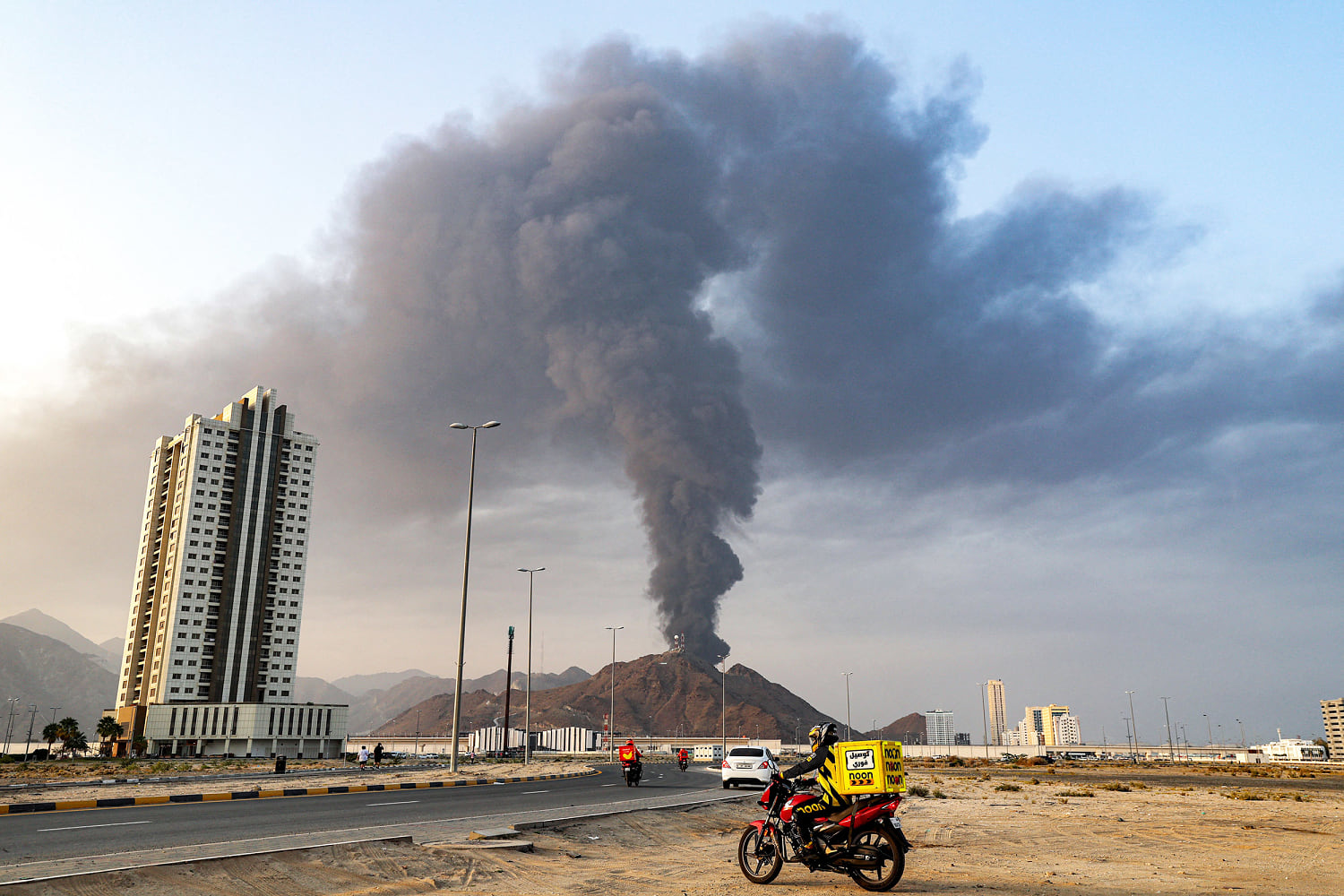
Iran has abandoned the "calibrated" responses of the early 2020s. Instead, it has opted for horizontal escalation, hitting 14 nations including every GCC member. By March 19, the damage was undeniable. Qatar’s Ras Laffan LNG facility, the heartbeat of global energy, sits smoldering under force majeure. Kuwaiti refineries are dark. Riyadh has seen ballistic debris rain down on its southern suburbs. The choice for Gulf leaders is no longer whether to stay out of the fight, but how to survive a war they neither started nor can stop.
The Geography of Vulnerability
For years, the United Arab Emirates and Saudi Arabia operated under a comfortable paradox. They bought the world’s most sophisticated missile defenses while simultaneously opening diplomatic backchannels to Tehran. This "de-risking" strategy was designed to ensure that if the U.S. and Iran ever came to blows, the Gulf would be the stable, silent partner of the West.
That theory collapsed when Iranian drones proved they could bypass multi-billion-dollar radar nets by sheer volume. In the first 48 hours of this conflict, the UAE absorbed an arsenal of drones and missiles nearly equal to the volume fired at Israel. The "gentleman’s agreement" between Abu Dhabi and Tehran is gone.
The Iranian logic is brutal and mathematical. If the Islamic Republic faces an existential threat, it will ensure the global economy feels the same. By striking the energy hubs of nations that host U.S. forces, Tehran is attempting to force the GCC to evict the Americans or face total industrial collapse. This is not a military campaign in the traditional sense; it is an act of economic necrotizing fasciitis.
The Mirage of U.S. Protection
The most stinging realization for Riyadh and Abu Dhabi has been the silence of the American security umbrella. Despite the activation of Integrated Air and Missile Defense (IAMD) systems, the U.S. focus remains squarely on the "decapitation" of the Iranian regime. While Washington cheers the reported death of Supreme Leader Ali Khamenei, it has offered little more than "solidarity" as Gulf desalination plants and ports take direct hits.
This has triggered a frantic, quiet recalibration. Saudi Foreign Minister Prince Faisal bin Farhan’s recent warning that the Kingdom "reserves the right to take military action" is a signal to Washington as much as Tehran. It is the language of a partner who realizes their protector is distracted.
The GCC states are currently trapped in a strategic pincer:
- The American Demand: Use of airspace and logistics to finish the "decapitation" of the IRGC.
- The Iranian Threat: The total destruction of the "Vision 2030" and "D33" economic projects through sustained drone attrition.
- The Domestic Risk: Partnering with Benjamin Netanyahu’s government during a period of extreme regional volatility, a move that could ignite internal unrest in Bahrain and Saudi Arabia.
Why Conventional Defense is Failing
The technical reality of this war has embarrassed the salesmen of Western defense hardware. While Patriot and THAAD batteries have intercepted high-altitude ballistic threats, they are being bled dry by $20,000 Iranian drones. The cost-to-kill ratio is unsustainable.
$$C_{ratio} = \frac{Cost_{Interceptor}}{Cost_{Target}}$$
In some engagements over the skies of Dubai, the $C_{ratio}$ has exceeded 100:1. You cannot defend a modern metropolis against a swarm of 500 drones using $3 million missiles without eventually running out of money, ammunition, or both. This is the "asymmetric exhaustion" Iran spent twenty years perfecting. It doesn't need to win a dogfight; it just needs to make the cost of being "neutral" higher than the cost of joining the fray.
The Quiet Expansion of the War
While the world watches the smoke over Tehran, the real shifts are happening in the shadows. Oman, the traditional "Geneva of the Middle East," has found its neutrality ignored, suffering strikes that signal the end of the mediator era. Meanwhile, the UAE and Saudi Arabia are being forced into an uncomfortable military alliance with Israel—not out of ideological shift, but out of a desperate need for real-time intelligence on drone swarms that the U.S. is failing to prioritize.
This is not a "choice" in the way political scientists describe it. It is a slow-motion car crash where every steering maneuver leads to a different kind of impact. If the Gulf states join the U.S.-Israeli coalition, they become permanent targets for an IRGC that, even if decapitated, will likely splinter into a thousand vengeful insurgent cells. If they stay "neutral," they watch their multi-trillion-dollar cities turn into "no-go zones" for international capital.
The transition from a defensive posture to an offensive one is already beginning. Saudi Arabia’s rhetoric has shifted from "de-escalation" to "significant capabilities." This suggests that the Kingdom may soon move to establish its own "buffer zones" within Iranian territory or launch its own strikes against drone launch sites. This would not be an act of support for the U.S., but a desperate attempt to seize control of its own security destiny.
The regional order is being rewritten by the minute. The era of the "Gulf Sandbox"—a place where the world’s elite could ignore the region's wars while enjoying its luxury—is over. The war has come to the doorstep, and the door is already off its hinges.
Would you like me to analyze the specific economic impact on the Saudi 'Vision 2030' projects following these infrastructure strikes?