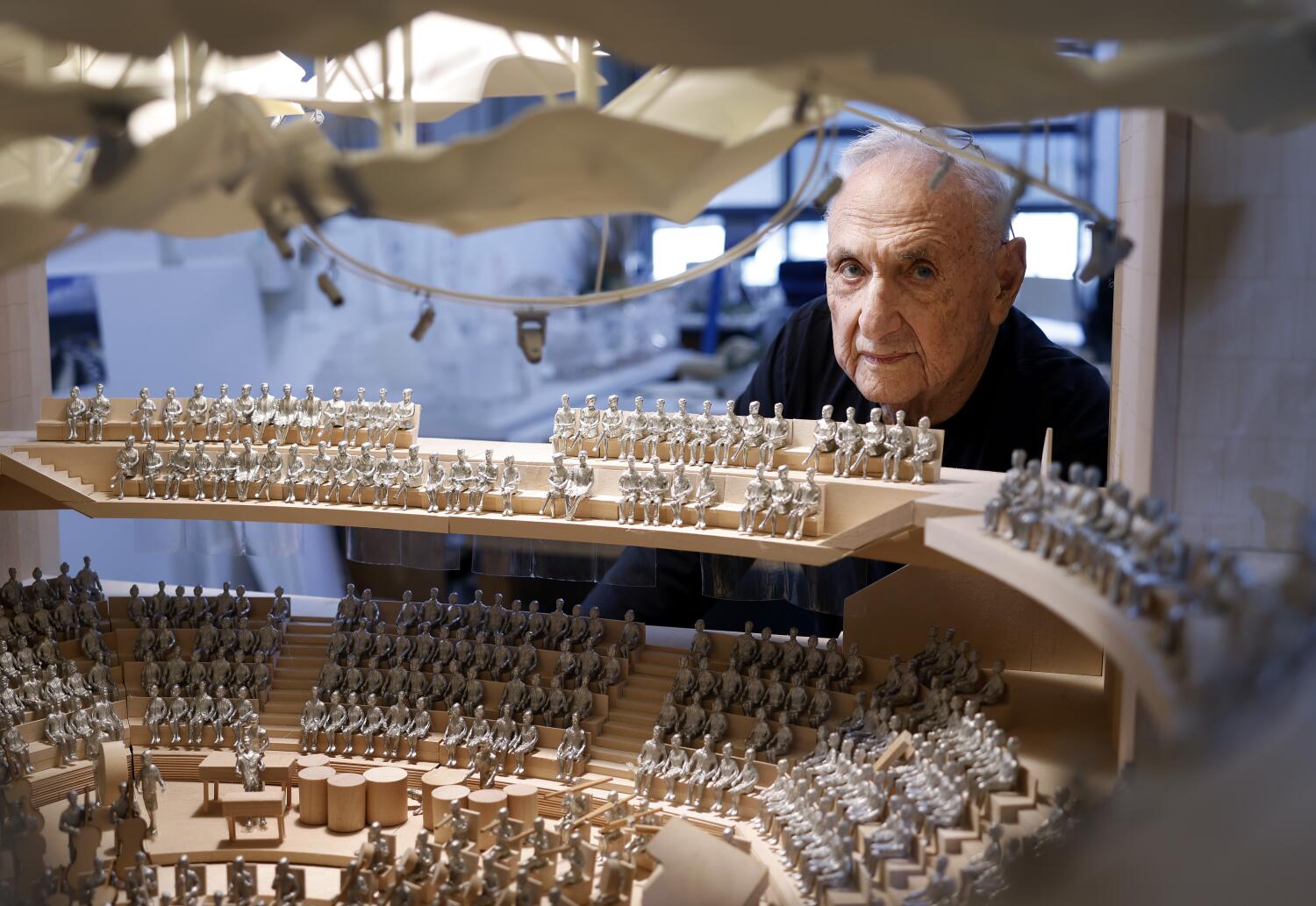
The architectural press is currently salivating over the "unrealized vision" of Grand Avenue in Los Angeles. They speak of Frank Gehry’s sketches as if they are sacred scrolls capable of resurrecting a dead zip code before the 2028 Olympics. It is a tired, romanticized narrative that relies on the "Bilbao Effect"—the debunked idea that one shiny, titanium-clad ego-trip can solve decades of systemic urban rot.
Grand Avenue isn't suffering from a lack of vision. It is suffering from a surplus of vanity.
While the competitor rags argue that Gehry’s delayed phases will "transform" downtown L.A. (DTLA), they ignore the basic physics of urban economics. You cannot build a community out of starchitecture and luxury condos when the ground-level reality is a transit-starved, heat-island-plagued concrete canyon. Gehry’s designs are beautiful sculptures, but sculptures make for terrible neighbors.
The Myth of the Architectural Savior
The "lazy consensus" suggests that if we just finish the Grand, the Bunker Hill area will finally become the "Champs-Élysées of the West." This is a fundamental misunderstanding of what makes a street thrive.
I have spent years watching developers burn through capital chasing the dream of "placemaking" by hiring the most expensive names in the industry. What they get is a monument, not a marketplace. The Walt Disney Concert Hall is a global icon, yet twenty years later, the sidewalk across from it remains a desolate wind tunnel for much of the day. Why? Because buildings designed as "objects" do not create "urbanity."
Gehry’s style is unapologetically inward-facing. His work is about the interior experience and the exterior silhouette. It is not about how a pedestrian interacts with a storefront. By doubling down on this aesthetic for the remaining parcels of Grand Avenue, the city is doubling down on a failed model of 20th-century urbanism: the isolated cultural fortress.
Why 2028 is a False Deadline
The 2028 Olympics are being used as a cattle prod to bypass sensible urban planning. The rush to "beautify" the corridor before the world arrives is a recipe for expensive, superficial fixes.
- Temporary Aesthetics: We are seeing a rush toward "pop-up" retail and luxury facades that lack long-term viability.
- Displacement Economics: Pushing for high-end residential in a neighborhood that lacks basic amenities like affordable groceries or safe green space creates a "high-rise island."
- Infrastructure Lag: You can build a Gehry tower, but if the Metro is perceived as inaccessible or the "last mile" connectivity is a nightmare of broken asphalt, the wealthy tenants they are courting won't stay.
Imagine a scenario where the $1 billion-plus slated for these shimmering towers was instead diverted into high-frequency micro-transit and 10,000 units of middle-income housing scattered throughout the historic core. You’d get a neighborhood. Instead, you're getting a trophy case.
The Retail Death Spiral Nobody Mentions
The competitor article waxes poetic about the "vibrant retail mix" Gehry’s vision will bring. This is a delusion.
Brick-and-mortar retail is in a structural collapse, yet developers still pitch these massive projects with 50,000 square feet of "curated" shop space. Who is going to rent it? Luxury brands are retreating to the safe havens of Beverly Hills and the Palisades. Independent boutiques cannot afford the triple-net leases required to service the debt on a Gehry-designed skyscraper.
The result is "zombie retail"—vast windows covered in vinyl wraps or, worse, a rotating door of venture-backed juice bars that vanish in six months. A successful street needs "fine-grained" urbanism—small, cheap, adaptable spaces. Gehry’s monumentalism offers the exact opposite: rigid, expensive, and oversized floor plates.
The High Cost of Beauty
Let’s talk about the math that the boosters ignore. Gehry’s designs are notoriously expensive to build. The complex curves and custom curtain walls add a "prestige tax" of 20% to 40% over standard high-quality construction.
When construction costs skyrocket, the developer has two choices:
- Raise the rent to levels that only the top 0.1% can afford.
- Ask for massive public subsidies and tax breaks.
In L.A., we usually see a bit of both. We are effectively subsidizing the aesthetic preferences of a billionaire developer and a celebrity architect under the guise of "public benefit." The real public benefit would be a street that doesn't feel like a high-security office park after 6:00 PM.
Breaking the Starchitectoral Fever
If L.A. actually wanted to transform Grand Avenue, it would stop looking for a savior in a black turtleneck.
The most successful urban spaces in the world—the ones people actually want to visit—weren't designed by a single hand. They are messy. They are layered. They are built over time by dozens of different architects with different styles and budgets.
Bunker Hill was famously "cleared" in one of the most disastrous urban renewal projects in American history. We wiped out a vibrant, dense, Victorian neighborhood to create a blank slate for monuments. Gehry’s "unrealized vision" is just the final chapter of that same 1950s mindset. It is the belief that the city is a project to be "completed" rather than an ecosystem to be nurtured.
The Counter-Intuitive Truth
The best thing that could happen to Grand Avenue is for the Gehry plan to be scrapped in favor of something boring.
Yes, boring.
We need six-story apartment blocks with wood frames. We need "dumb" buildings that are cheap to build, cheap to rent, and easy to modify. We need a grid that prioritizes shade trees over "iconic silhouettes."
The "People Also Ask" sections on search engines are full of queries like "Is downtown LA safe?" and "Where to walk in DTLA?" People aren't asking "Where is the nearest titanium-clad concert hall?" They are looking for basic urban competency.
The hard truth is that architectural merit does not equal social value. A city's greatness isn't measured by its skyline; it's measured by its sidewalks. And right now, Grand Avenue’s sidewalks are a failure that no amount of Gehry-designed metal can fix.
Stop asking when the vision will be finished. Start asking why we bought into this specific vision in the first place. The obsession with "World Class Cities" usually results in cities that are great for tourists and miserable for residents.
If you want to see the future of Los Angeles, stop looking at the renderings of the Grand. Look at the places where the city is actually growing despite the lack of a master plan. Look at the pockets of the Arts District or even parts of Hollywood where the architecture is secondary to the activity.
The Grand Avenue project is a ghost of a 20th-century dream. It’s time to stop haunting the city with it.
Build something that doesn't require a press release to explain why it's important. Build a place for people to live, not a place for them to marvel at.
Stop trying to fix Grand Avenue with "art." Fix it with a grocery store and a bike lane.
Would you like me to analyze the specific zoning failures that prevent this "boring" but effective urbanism from taking root in DTLA?