The Moon is not a dead rock. We have spent centuries gazing at its pale, pockmarked face, convinced of its stillness, but beneath that bone-white regolith, the lunar body is restless. It shudders. It groans. It experiences "moonquakes" that can last for an hour, vibrations that would feel like a slow, rhythmic grinding to anyone standing on the surface.
For the astronauts of the upcoming Artemis missions, these tremors are more than a geological curiosity. They are a threat. If you are building a pressurized habitat where a single hairline fracture means the difference between breathing and boiling, you need to know exactly when the ground starts to move.
But there is a problem. Sending traditional seismometers—heavy, delicate boxes of springs and magnets—to the Moon is an expensive nightmare. They break. They require power. They are difficult to deploy across vast, jagged craters. To truly understand the Moon’s interior, we don't just need a few sensors; we need a nervous system.
We might have found it in something we already use to binge-watch television: fiber-optic cables.
The Invisible Witness
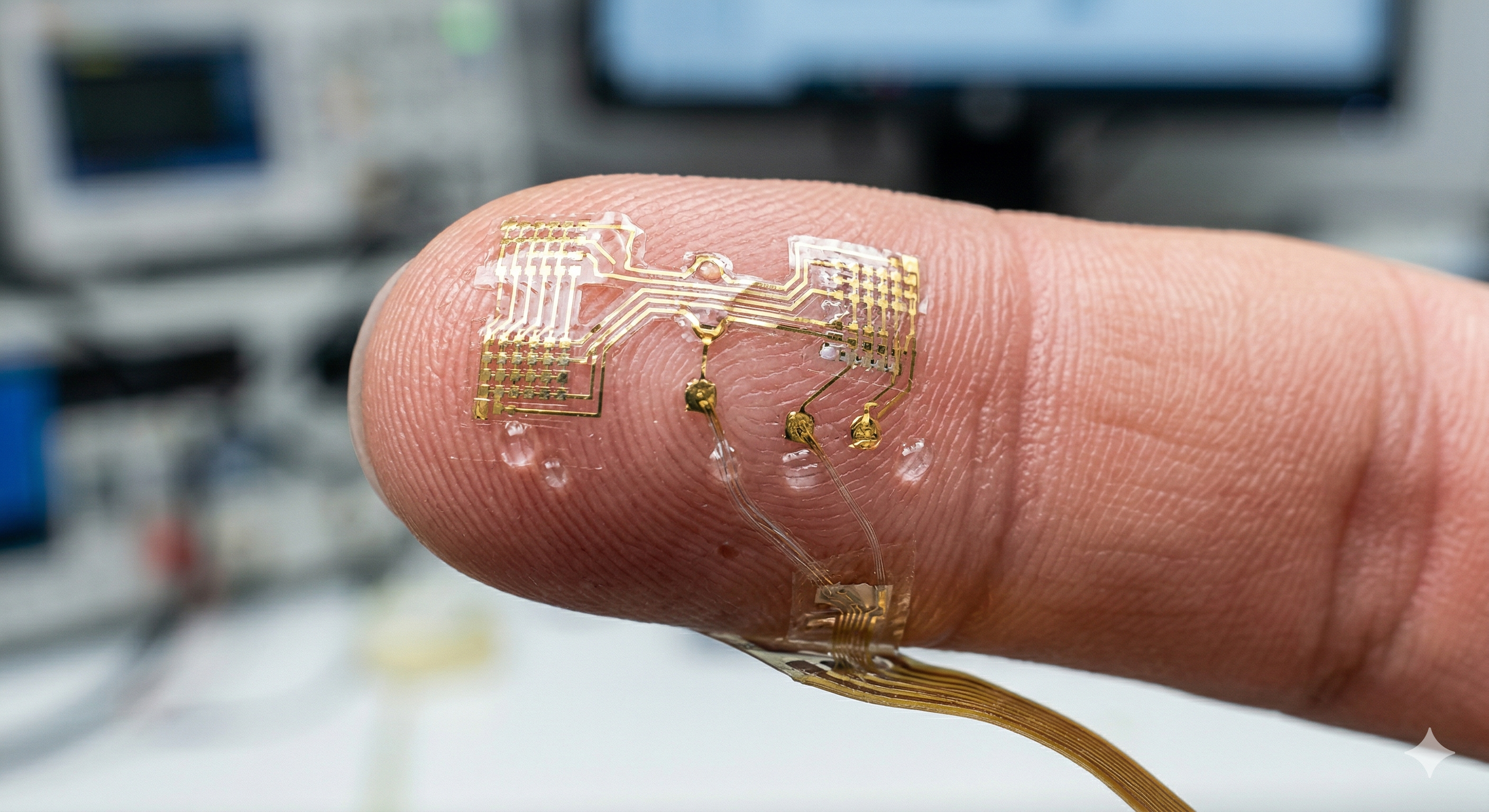
Imagine a strand of glass no thicker than a human hair. Usually, we use these cables to bounce light signals across oceans to carry data. However, these tiny glass threads possess a strange, secondary talent. They are incredibly sensitive to vibration.
When a seismic wave—or even a heavy footfall—passes over a fiber-optic cable, the glass stretches and compresses by a fraction of a nanometer. If you fire a laser down that cable, those microscopic distortions change how the light reflects back to the source. By analyzing these tiny shifts in the light's "echo," scientists can turn a simple spool of glass into a massive, continuous sensor.
This technique is called Distributed Acoustic Sensing, or DAS. On Earth, we use it to monitor oil pipelines or detect footsteps near high-security borders. On the Moon, it could be the "tripwire" that saves a colony.
A Hypothetical Morning on the South Pole
Consider a researcher named Elias, living in a lunar outpost twenty years from now. He is drinking recycled water, looking out a reinforced polymer window at the long, blue shadows of the Shackleton Crater.
Outside, a network of thin, transparent cables lies buried just beneath the gray dust, branching out from the base like the roots of a tree. Elias doesn't see them. No one does. But the laser at the heart of the base is "listening" to every inch of those fibers.
Suddenly, a monitor flickers. Five miles away, a small meteorite strikes the surface. On a traditional map, this would be a single data point. But because of the fiber-optic "nervous system," Elias sees a high-definition ripple moving across his screen. He can see the exact speed of the shockwave, the density of the regolith it traveled through, and precisely how much energy will hit the base’s foundations before the ground even begins to sway.
This isn't just data. It’s a map of the invisible.
The Weight of a Shadow
The genius of this approach lies in its simplicity. Space travel is governed by the brutal math of "payload mass." Every extra pound of equipment requires an exponential increase in fuel to escape Earth's gravity. Carrying a hundred traditional seismometers is a logistical impossibility.
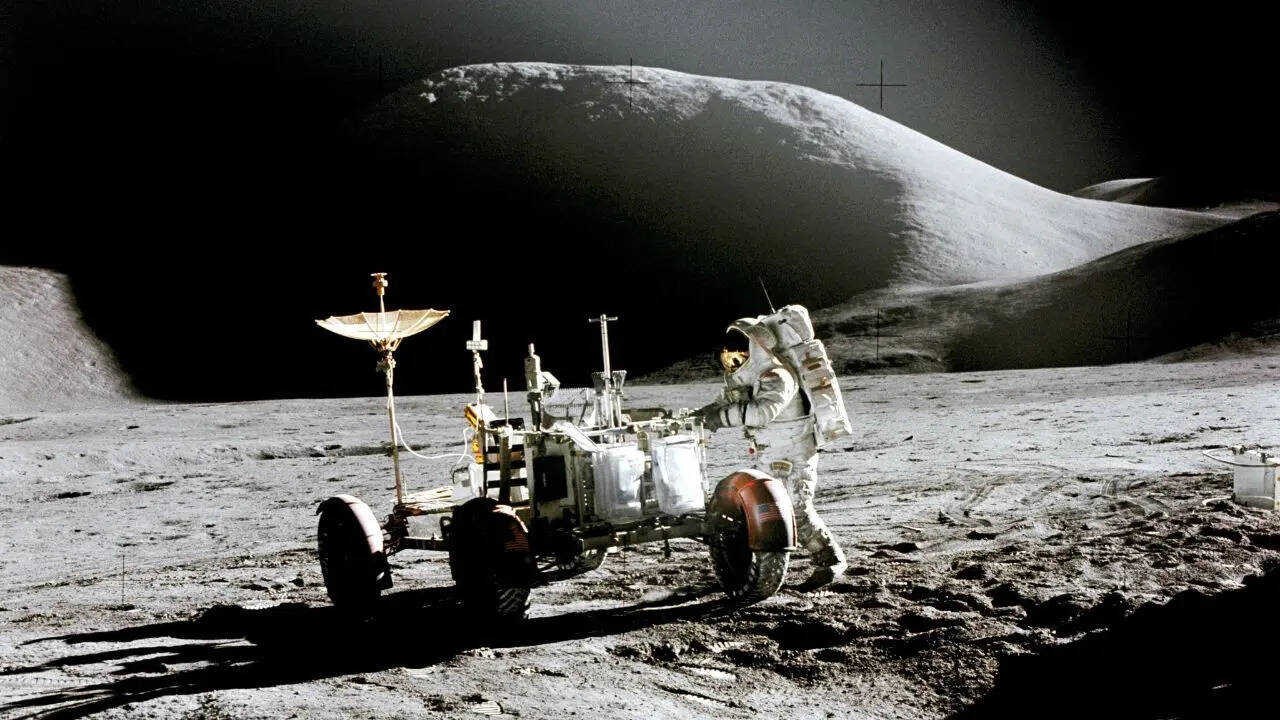
A spool of fiber-optic cable, however, is light. It is flexible. You could drop it from a moving rover like a spider spinning a web. You could even use the very same cables meant for communication to double as a seismic array.
NASA researchers have been testing this in some of the most unforgiving places on Earth. They’ve laid these fibers across Antarctic ice sheets and volcanic ridges to see if they can survive the "Lunar-like" extremes of temperature and pressure. The results are startling. The glass holds. The laser finds the truth.
Listening to the Core
Why does it matter if the Moon shakes? To the average person, it seems like a niche scientific detail. But to understand the shakes is to understand the history of our own origin.
The Moon is a time capsule. Because it has no wind, no rain, and no plate tectonics to recycle its crust, its internal structure is a preserved record of the early solar system. By "listening" to how seismic waves bounce off the lunar core, we can finally determine if the Moon has a solid heart or a molten one.
We are looking for the "Moon-code." Every tremor is a syllable. If we can lay enough glass, we can finally hear the full story of how the Earth and its silent partner were born.
The Fragile Reality
There is a certain poetry in the fact that our most advanced lunar base will likely rely on something as fragile as glass. We think of space exploration as a triumph of steel, titanium, and fire. We envision massive rockets and hulking metal rovers.
Yet, the most vital component might be a shimmering, invisible thread.
As we push further into the dark, we are realizing that survival isn't just about building stronger walls. It is about sensing the environment with more intimacy. It is about feeling the ground breathe before it breaks.
We are no longer just visitors snapping photos of the lunar surface. We are weaving ourselves into the landscape. We are giving the Moon a voice, and for the first time, we are finally prepared to listen.
The next time you look up at that silver disc in the night sky, don't see a desert. See a giant, waiting to be wired. The silence of the Moon is about to end, replaced by the steady, rhythmic pulse of light traveling through a strand of glass, waiting for the ground to speak.