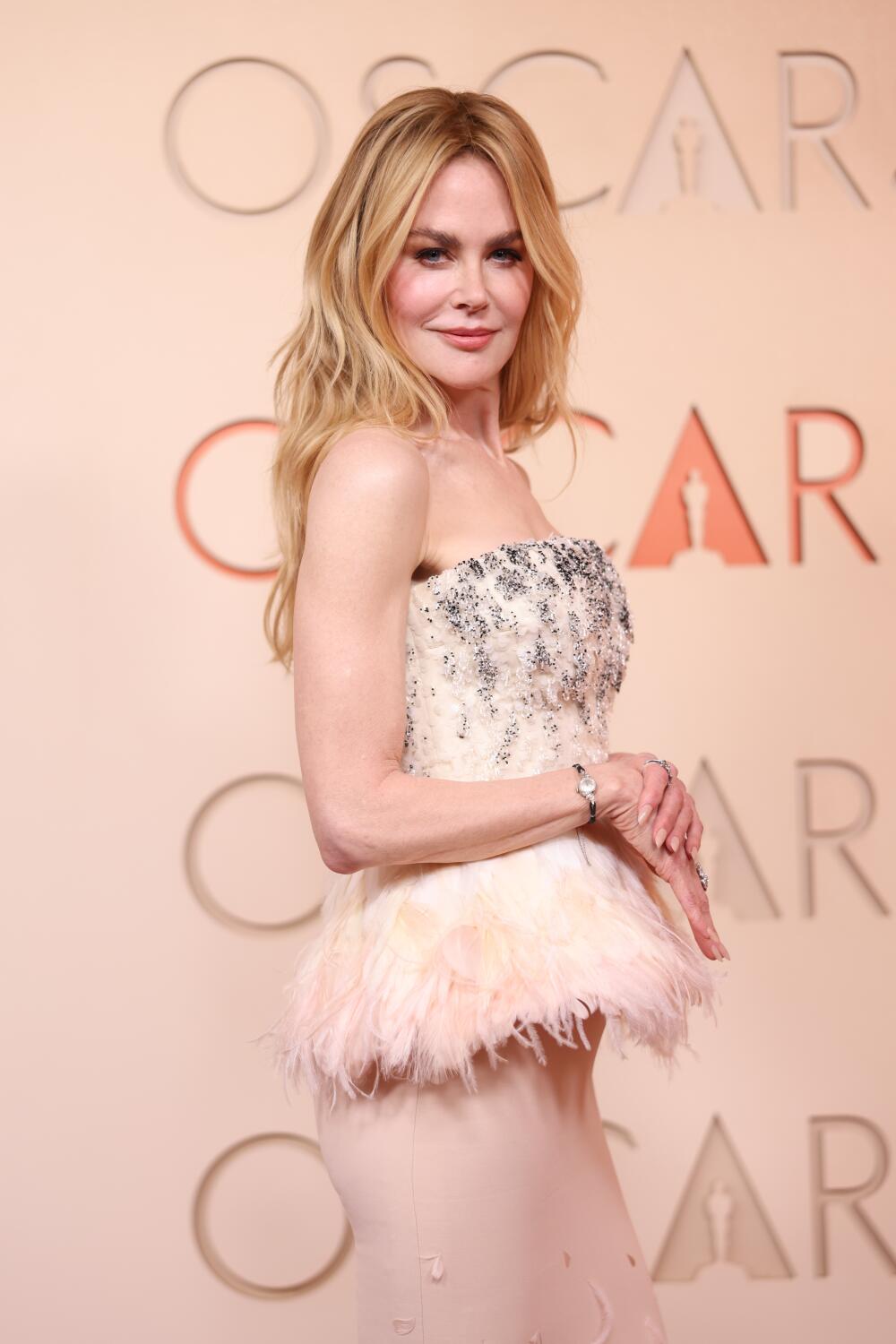
The red carpet is no longer a display of individual taste. It is a high-stakes algorithmic optimization project. While the mainstream press drools over "the best looks" of the 2026 Oscars, they are missing the reality right in front of them: we are watching the total homogenization of human identity.
I’ve spent fifteen years in the orbit of stylists and brand consultants. I’ve seen the mood boards. I’ve watched the "risk-taking" get sanded down by focus groups until every star looks like a high-resolution render of a generic luxury avatar. If you think 2026 was a banner year for style, you’ve been conditioned to accept high-budget conformity as a substitute for soul.
The Stylist Industrial Complex is Killing Art
The biggest lie told about the 2026 Academy Awards is that the actors chose their outfits. They didn't. They were dressed by a committee of four to six people whose primary goal is "brand safety."
In the past, a star might walk out in something truly bizarre—think Björk’s swan or Celine Dion’s backward tuxedo. Those weren't just outfits; they were declarations of existence. Today, the "best dressed" lists are dominated by archival pulls that feel like museum exhibits rather than clothing.
When a nominee shows up in a 1994 vintage gown, the media hails it as a "tribute to fashion history." It isn’t. It’s a calculated move to avoid a "What Was She Thinking?" headline. It’s safe. It’s predictable. By wearing something already vetted by history, the celebrity opts out of the present. They aren't setting a trend; they are hiding behind one that already worked.
Luxury Houses Have Turned Humans into Billboards
We need to talk about the "Ambassador Lock-In."
Watch the carpet closely. You can predict exactly what every A-lister will wear based on their contract.
- Actor A is signed to a French house.
- Actor B is the face of an Italian conglomerate.
- Actor C has a jewelry deal that dictates the neckline of their dress.
This isn't a fashion show. It’s a corporate merger. The "best looks" are simply the ones where the contract had the highest budget for tailoring. When the garment is chosen eighteen months in advance as part of a multi-million dollar endorsement deal, the element of "style" vanishes. It is replaced by "compliance."
The result? A sea of impeccably constructed, boringly perfect garments that lack any friction. Fashion requires friction to be interesting. Without it, it’s just upholstery for famous people.
The AI-Driven Aesthetic of 2026
There is a specific sheen to the 2026 red carpet that feels uncanny. It’s what I call "The Prompt-Ready Look."
Because celebrities are terrified of being "cancelled" for a fashion faux pas, their teams are now using predictive analytics to determine which silhouettes will perform best on social media. They aren't dressing for the room. They are dressing for the 1080x1920 vertical crop.
This leads to "Main Character Architecture"—dresses with massive volume or neon accents that look great in a static image but are functionally ridiculous in a living, breathing social environment. We saw it all night: stars who couldn't sit down, couldn't turn their heads, and couldn't interact with their peers because their "look" was designed for a lens, not a human being.
Why "Best Dressed" Lists are Factually Wrong
Most fashion critics use a flawed rubric. They look for:
- Fit (The bare minimum requirement).
- Brand prestige (Laziness).
- Visual impact (Subjective noise).
A truly superior look should be judged on Intent vs. Execution. Imagine a scenario where a young, indie darling shows up in a thrifted, modified suit. The "insider" consensus would pan them for not being "elevated" enough. Meanwhile, they praise a veteran actress in a $500,000 custom gown that looks exactly like the one she wore in 2024, 2022, and 2018.
The industry rewards repetition because it’s easy to digest. We have reached a point where "Best Dressed" actually means "Most Consistent with Established Expectations." It’s the death of the avant-garde.
The Gender-Neutral Trap
The 2026 Oscars saw a massive uptick in "gender-fluid" fashion. On the surface, this is progress. In practice, it has become another uniform.
We’ve moved from "men in black tuxedos" to "men in black tuxedos with a sheer lace panel or a pearl necklace." It’s the same template with a different accessory. It’s performative edge. If everyone is "breaking the rules" by wearing the exact same "rule-breaking" outfit, then no rules are actually being broken. You’re just following a different manual.
Real disruption would be a man wearing a poorly fitted, cheap suit from a mall brand as a critique of the excess of the evening. But nobody has the courage for that. They want the "Best Dressed" badge too much.
The Sustainability Scam
Every third star on the carpet claimed their look was "sustainable" or "eco-conscious."
Let’s be honest: flying a team of ten people across the globe for three days of fittings to wear a dress made of "recycled ocean plastic"—which was then shipped in a private jet—is not an environmental win. It’s greenwashing at its most glamorous.
The most sustainable thing any of these people could do is wear something they already own. But the industry won't allow that. The cycle requires "newness," even if that newness is a lie.
Stop Asking "Who" They Are Wearing
The standard red carpet interview question is a symptom of the problem. By asking "Who are you wearing?" we reduce the artist to a mannequin. We should be asking "Why are you wearing this?"
If the answer is "Because my agent told me to," or "Because I’m under contract," at least that would be honest. The 2026 Oscars was a masterclass in beautiful, expensive, meaningless noise.
If you want to see real style, look at the people in the background. Look at the writers who haven't been groomed by a dozen consultants. Look at the people who actually had to choose their own clothes. They might not be "best dressed" by the standards of a glossy magazine, but at least they look like themselves.
Burn your "Best Looks" bookmarks. The real fashion happened in the cars on the way to the after-party, when the heavy, rented jewelry came off and the corporate masks finally slipped.
Go buy a jacket you actually like, regardless of the label. That’s more "fashion" than anything we saw on that stage.


