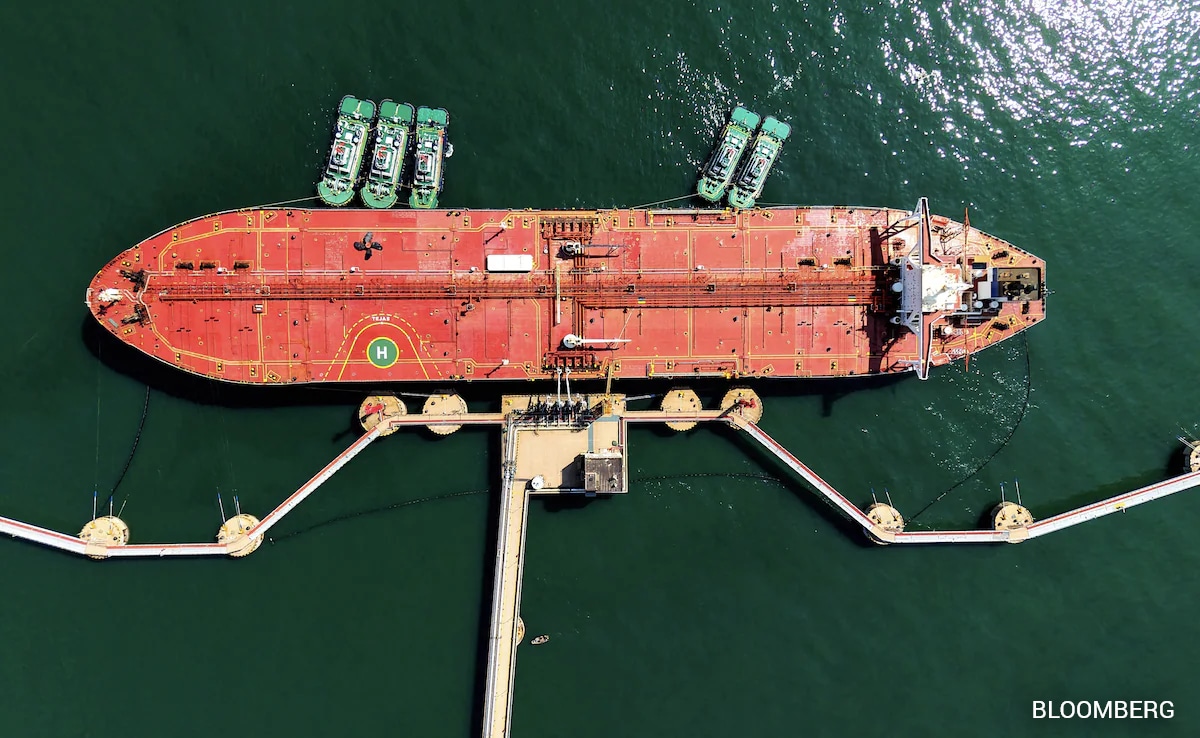
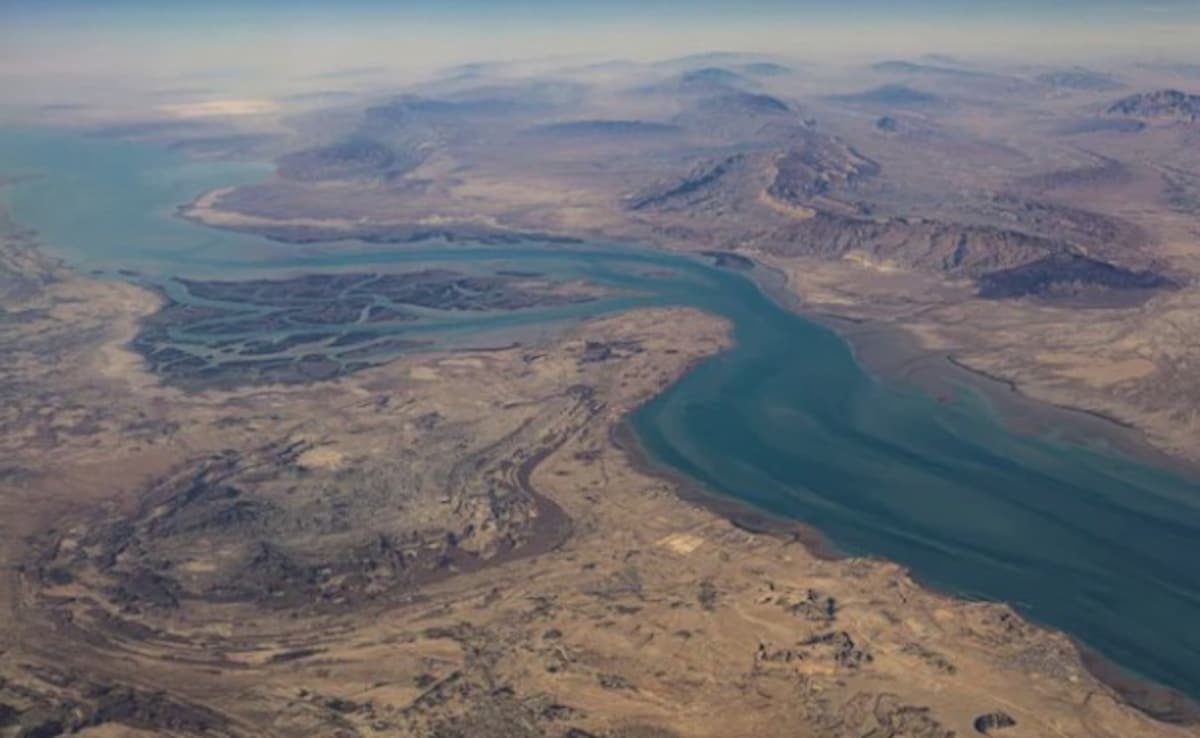
The global energy market is currently vibrating with a tension not seen since the 1970s. As conflict destabilizes the Middle East and threatens to throttle the Strait of Hormuz, the price of crude oil dictates the economic health of every Western nation. But while Washington and Brussels scramble to secure tankers and manage strategic reserves, Beijing is watching a different clock. For China, a spike in oil prices is not a disaster. It is an accelerant. By systematically dominating the manufacturing of solar panels, lithium-ion batteries, and electric vehicles, China has decoupled its long-term growth from the volatility of fossil fuels.
This was not an accident of geography or a stroke of luck. It was a multi-decade industrial siege. Every time a regional war sends oil toward $100 a barrel, the Western world’s transition to renewables feels like a desperate, expensive scramble. For China, that same price hike serves as a marketing campaign for its exports. They have positioned themselves as the only global entity capable of providing the hardware required to escape the oil trap they helped the West stay stuck in for years.
The Strategic Trap of Fossil Fuel Volatility
Western economies are built on the back of just-in-time delivery and cheap logistics, both of which are hostages to the price of Brent Crude. When conflict in the Middle East threatens to pull Iran into a direct regional war, the immediate reaction in London or New York is an inflationary shock. This shock travels through the pump, into the grocery store, and eventually into interest rate hikes that stifle domestic innovation.
China faces these same shocks in the short term as the world’s largest oil importer. However, they treated this vulnerability as a national security emergency twenty years ago. While the United States was focused on fracking to achieve "energy independence"—which still relies on global commodity pricing—China focused on electrification.
The math is simple and brutal. If you own the oil, you control the present. If you own the battery supply chain, you control the next fifty years. By subsidizing their domestic "New Three" industries—electric vehicles, lithium batteries, and solar cells—Beijing ensured that when the inevitable oil crisis arrived, the world would have no choice but to buy the solution from Chinese factories.
The Battery Hegemony and the Refining Monopoly
Most analysts look at where minerals are mined. They see lithium in Australia or cobalt in the Congo and assume the West can simply "near-shore" its way out of trouble. This is a fundamental misunderstanding of the industrial reality. Mining is the easy part. The bottleneck is chemical refining.
China currently controls roughly 80% of the world’s battery chemical refining. Even if a mine opens in Nevada or Quebec, the raw ore often must travel across the Pacific to be processed into battery-grade material. This gives Beijing a "kill switch" over the global automotive industry. During a war-induced energy crisis, China can prioritize its own domestic manufacturers, ensuring that Chinese EVs remain affordable while Western competitors struggle with a fractured and expensive supply chain.
This monopoly extends to the very guts of the green transition. Consider the anode and cathode production. China produces about 90% of the world’s anodes and a significant majority of cathodes. When oil prices rise, and the demand for EVs surges, Western automakers find themselves in a humiliating position. They must outbid each other for Chinese components, effectively paying a "tax" to Beijing for the privilege of trying to go green.
Solar as a Tool of Geopolitical Leverage
Solar energy was once a German and American innovation. Today, it is a Chinese commodity. Through massive state-directed credit and the exploitation of internal economies of scale, Chinese firms have driven the cost of solar modules down by over 90% in the last decade.
This has created a secondary effect that is often overlooked in traditional news cycles. As oil-dependent nations in the Global South watch their foreign exchange reserves dwindle due to high fuel costs, China arrives with a pre-packaged alternative. They offer "turnkey" renewable grids. These are not just sales; they are long-term diplomatic anchors. A country that runs on Chinese solar panels and Chinese grid software is a country that stays within Beijing's sphere of influence, regardless of what happens in the Persian Gulf.
The Fatal Flaw in Western Protectionism
The response from the US and the EU has been to retreat behind tariffs. By slapping 100% duties on Chinese EVs or taxing imported solar cells, Western governments are trying to buy time for their own industries to catch up.
It is a failing strategy. Tariffs do not build factories; they only make the transition more expensive for the local consumer. While a European consumer pays a premium for a locally made EV that uses Chinese batteries anyway, a Chinese consumer is buying a high-tech vehicle at half the price. This gap in "energy cost of living" allows China to keep its manufacturing costs low even as the rest of the world battles inflation.
Infrastructure as Destiny
The "how" of China’s dominance isn't just about money; it’s about permitting and speed. Building a high-voltage transmission line in the United States can take fifteen years of legal battles and environmental reviews. China builds thousands of miles of ultra-high-voltage (UHV) lines annually. These lines are the "interstate highway system" of the 21st century, moving wind and solar power from the Gobi Desert to the industrial hubs of the coast.
Without this infrastructure, the West cannot utilize its own renewable potential. We have the wind in the Midwest and the sun in the Southwest, but we lack the "copper nerves" to move that energy to the cities. China’s ability to build at scale means that when the oil markets break, their domestic economy can pivot to electricity almost instantly. Ours cannot.
The Irony of the Mineral Race
We are currently witnessing a massive misallocation of capital in the West. Billions are being poured into "alternative" battery chemistries—solid-state, sodium-ion, or hydrogen—in hopes of leapfrogging China. While these technologies are promising, they are years, if not decades, from mass-market viability.
Meanwhile, China is already the leader in sodium-ion batteries, a technology that uses abundant salt instead of scarce lithium. They aren't waiting to be disrupted; they are disrupting themselves. They have turned the energy transition into a race of industrial attrition. By the time a Western "breakthrough" reaches the factory floor, China has already scaled the previous three generations of that technology and crashed the price.
Hard Truths for the Decade Ahead
The belief that the West can "de-risk" from China while simultaneously hitting net-zero targets is a fantasy. You cannot have both. If you want a fast transition away from war-torn oil markets, you must use Chinese hardware. If you want to shut out China, you must accept twenty more years of being a hostage to Middle Eastern volatility and high energy prices.
There is no middle ground where a domestic Western industry miraculously appears overnight to match the scale of the Yangtze River Delta. The industrial base required to process millions of tons of high-purity silicon and lithium took thirty years to build. It cannot be replicated by a few years of subsidies and some optimistic press releases from Silicon Valley.
The New Energy Map
The map of the world is being redrawn. The old lines were drawn around pipelines and tanker routes. The new lines are being drawn around refineries and patent thickets. Every time a drone hits a refinery in the Middle East, the value of a Chinese-controlled lithium mine increases.
We are not entering a period of energy independence. We are trading one form of dependence for another. The difference is that the old dependence was on a geological accident—who happened to be sitting on the oil. The new dependence is on industrial foresight. The West spent the last twenty years trying to "fix" the Middle East. China spent those same twenty years building the factories that will make the Middle East irrelevant.
Stop looking at the price of oil as a barometer for the future. Look at the price of a kilowatt-hour in Shenzhen versus Chicago. That is where the war is being won. Western policy makers need to stop treating green tech as a "climate goal" and start treating it as the most significant industrial arms race since the Cold War.
Build the refineries. Streamline the grid. Stop the litigation-heavy approach to infrastructure. Or prepare to pay China for the privilege of keeping your lights on in an oil-less world.