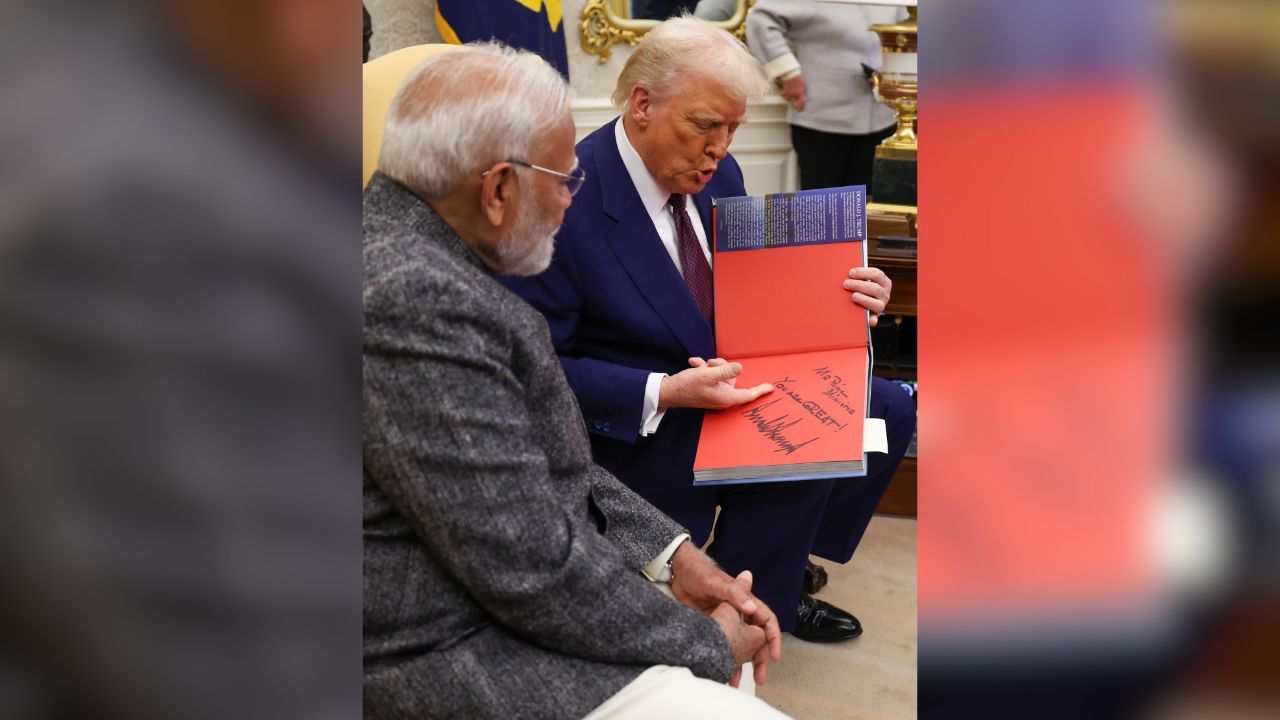
Bureaucrats love a good ribbon-cutting ceremony. They love digital portals even more. They present a slick interface, call it a "bridge for MSMEs," and wait for the accolades to roll in. The recent launch of the US-India trade portal is the latest exercise in geopolitical theater. It’s a shiny wrapper on a box that is, for all intents and purposes, still empty of the structural reforms needed to actually hit that $500 billion target by 2030.
If you believe a website is the primary friction point stopping a mid-sized manufacturer in Ohio from selling to a distributor in Gujarat, you haven't spent five minutes dealing with the Actual Reality of cross-border logistics. We are being sold a narrative of "seamless integration" while the underlying plumbing is clogged with protectionist debris and regulatory static.
The Math of the $500 Billion Delusion
To hit $500 billion in bilateral trade by 2030, we aren't looking at incremental growth. We are looking at a moonshot. Current figures hover around $190 billion to $200 billion. To more than double that in less than six years requires an annual growth rate that defies historical precedent and current macroeconomic headwinds.
The "lazy consensus" suggests that simply making information more accessible will trigger a gold rush. It won't. Information isn't the problem; friction is.
- Tariff Walls: India remains one of the most protected economies in the G20. You can have the best trade portal in the world, but if a US-made medical device hits a 20% basic customs duty plus additional health cesses, the portal is just a digital catalog of things Indians can't afford.
- The Localization Trap: India’s push for "Atmanirbhar Bharat" (Self-Reliant India) is fundamentally at odds with the US desire for market access. You cannot demand that American companies move their entire supply chain to Chennai while simultaneously asking for a surge in exports. That’s a zero-sum game disguised as a partnership.
- Regulatory Divergence: From data sovereignty laws to e-commerce rules that change every time a domestic lobby gets loud, the "ease of doing business" is often a Moving Target.
Portals Are For People Who Don't Do Business
I’ve watched companies burn through seven-figure market-entry budgets because they trusted the "official" narrative. They look at the high-level MOU (Memorandum of Understanding) and think the path is clear. Then they hit the ground. They realize the trade portal doesn't help when a shipment is stuck in customs because a harmonized system (HS) code is interpreted differently by a local official than it was by the digital interface.
The portal is a placebo. It makes the governments feel like they are doing something while avoiding the politically "expensive" work of lowering tariffs or harmonizing standards.
Imagine a scenario where a small software firm in Bangalore wants to provide AI-driven analytics to a US healthcare provider. Does the portal solve the HIPAA compliance hurdles? Does it address the liability shifts in the new Indian Digital Personal Data Protection Act? No. It gives them a link to a PDF that was outdated six months ago.
The Missing Link is Capital Not Clicks
The obsession with "trade" (shipping physical goods or services) ignores the real engine of the US-India relationship: Investment flows.
If we want to hit $500 billion, we need to stop talking about selling more widgets and start talking about the deep integration of capital markets. The US is a capital-surplus nation; India is a capital-starved nation with a demographic dividend. The math should be easy. Yet, we see friction at every turn.
- Tax Uncertainty: The specter of retrospective taxation might be "gone," but the administrative burden of navigating the Indian tax system remains a primary deterrent for US Private Equity.
- Repatriation Friction: It’s still too hard to get money out. If an American investor can’t see a clear, frictionless path to exit and repatriation, they will price that risk into the deal, or they’ll just go to Vietnam.
- Intellectual Property (IP) Skepticism: The US pharmaceutical industry remains the loudest voice in Washington against India’s patent regime. A trade portal won't fix the Section 3(d) of the Indian Patents Act. Only hard-nosed legislative negotiation will.
The China Plus One Fantasy
The "China Plus One" strategy is the current darling of the Davos set. The idea is that global firms will flee the PRC and land squarely in India. This is a dangerous oversimplification.
When a firm leaves China, it doesn't just look for a large population. It looks for infrastructure efficiency. China’s logistics costs as a percentage of GDP are significantly lower than India’s. While India has made massive strides in highway construction and port efficiency (the Gati Shakti initiative is a rare example of a policy that actually has teeth), it is still playing catch-up.
Vietnam, Thailand, and Mexico aren't waiting for India to get its digital portals in order. They are competing on raw utility, tax holidays, and integrated manufacturing clusters. India’s advantage is its scale, but scale without efficiency is just a bigger mess.
Why MSMEs Will Likely Ignore This
The portal claims to target Micro, Small, and Medium Enterprises. This is the most underserved segment of the economy. It’s also the segment least likely to be helped by a government-run website.
Small business owners don't need "information." They need risk mitigation. * They need export credit insurance that doesn't cost a fortune.
- They need a dispute resolution mechanism that doesn't take ten years in the Indian court system.
- They need a solution to the volatile USD-INR exchange rate.
A portal is a static tool for a dynamic problem. Real trade growth happens in the trenches, through private-sector distributors who understand the "hidden" costs of doing business—the baksheesh, the "extra" inspections, and the localized bottlenecks that no bureaucrat in DC or Delhi will ever admit exist.
The Truth About the 2030 Goal
Setting a $500 billion goal is a political tactic. It’s a "North Star" designed to keep the bureaucracy moving in the same direction. But without a fundamental shift in how both nations view protectionism, it’s just a number on a slide deck.
The US is currently in an era of "New Industrial Policy"—which is just a polite way of saying "Subsidies and Protectionism." Between the Inflation Reduction Act (IRA) and the CHIPS Act, the US is looking inward. India is doing the same with its Production Linked Incentive (PLI) schemes.
When both partners are trying to "bring manufacturing home," they aren't looking to trade; they are looking to compete. You cannot have a flourishing bilateral trade relationship when both parties are incentivizing their companies not to import from the other.
How to Actually Fix the Relationship
If we want to stop the posturing and start the progress, we have to kill the fluff.
- Total Tariff Elimination on Tech: Instead of broad trade deals that take decades, pick a sector. Eliminate all duties on green energy tech, semiconductors, and aerospace components. Tomorrow.
- Mutual Recognition Agreements (MRAs): If a product is certified safe by the FDA, it should be fast-tracked by the CDSCO in India, and vice versa. Stop making companies prove the same thing twice.
- A "Fast-Track" Judicial Corridor: Create a dedicated arbitration channel for US-India commercial disputes. If a company knows they can get a legally binding resolution in 90 days instead of 90 months, the floodgates of investment will open.
Stop Reading the Press Releases
The next time you see a headline about a "transformative" digital portal or a "historic" MOU, look at the tariff schedules. Look at the ease of capital repatriation. Look at the number of pending commercial cases in the High Courts.
Business ties aren't "boosted" by portals. They are built on the cold, hard certainty of profit and the removal of state-sponsored hurdles. Everything else is just noise.
The US and India are destined to be partners, but not because of a website. They will be partners because they have no other choice in a world dominated by a rising China. But if we keep pretending that "information access" is the problem, we’ll be sitting here in 2030 wondering why the trade needle hasn't moved while our competitors have already eaten our lunch.
Stop building portals. Start cutting the red tape that makes them necessary.